BRIDGING IMMUNITY GAP: INSIDE FCT’S GRASSROOTS BATTLE TO ERADICATE DIPHTHERIA

By: Wisdom Acka
In the quiet border community of Karshi, located within the Federal Capital Territory (FCT), the line between health security and vulnerability is often as thin as the road separating one state from another.
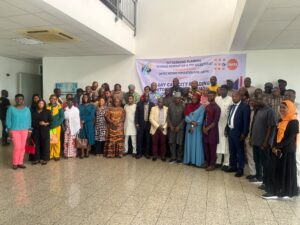
Following a recent resurgence of diphtheria—a highly contagious, life-threatening bacterial infection caused by Corynebacterium diphtheriae—health officials, international partners, and traditional leaders gathered directly in the heart of the community to launch an aggressive, grassroots containment drive.
Grassroots Intervention over Comfort Zones.
Leading the charge, Mandate Secretary for the Health Services and Environmental Secretariat (HSES), FCT Administration, Dr. Adedolapo Fasawe, made it clear that the era of managing public health crises strictly from administrative offices is over.
Convening the outreach on behalf of the FCT Minister, Barrister Nyesom Wike, Dr. Fasawe emphasized that access to healthcare must remain equitable regardless of whether a resident lives in an urban center or a rural border settlement.
”Our presence here today (10th August, 2026) in Karshi carries an important message. We have not asked you to come to our offices, to our comfort zones, or to the hospitals; we are coming here because living in a rural community should not deter or prevent anyone from accessing healthcare.
”We brought this message here because cases were identified from this area,” Dr. Fasawe declared to the huge gathering of community members, market women, and traditional heads.
Detailing the severity of the outbreak, Dr. Fasawe revealed that as of the end of last week, the FCT had investigated 15 suspected cases, adding that laboratory tests officially confirmed five of those as diphtheria, with two tragic fatalities recorded.
Addressing the dangerous practices surrounding the disease’s hallmark symptom—a thick, gray pseudomembrane covering the back of the throat—Dr. Fasawe issued a stark warning against home remedies and quackery.
”In going further into the community, we are starting to suspect that more people have died,” she explained, citing a tragic incident where a family engaged a local barber to physically cut away the membrane from a child’s throat.
”That child bled to death; that child died of shock. Let us not try to treat diphtheria at home when we see it. Do not touch or scrape it. Report to the nearest health facility immediately,” she warned.
According to her, early symptoms such as cough, catarrh, and mild fever can quickly escalate to difficulty swallowing, severe neck swelling (bullneck), and respiratory distress.
However, Dr. Fasawe reassured residents that diphtheria is both preventable through routine childhood vaccination and treatable when identified early.
To ensure seamless reporting, the FCT Administration publicly introduced the local Disease Notification and Surveillance Officer (DSNO) for Karshi, Mr. Adamu, making his direct contact number (0818 579 0793) available to residents, chemists, and private clinics.
Community Ownership and Traditional Leadership.
The strategic choice of Karshi as the focal point for risk communication resonates strongly with local traditional institutions. Speaking through the Hakimi (District Head) of Karshi, Alhaji Ahmed Doka, the Paramount Chief of Karshi, HRH Ismaila Mohammed, expressed deep appreciation for the government’s proactive measures and presence.
Responding to queries regarding local fatalities, Alhaji Doka clarified the unique geographical dynamics of the area, noting that while some reported cases originated near the border with Nasarawa State, such as the Kokosa area, the community stands fully aligned with the FCT Administration’s public health directives.
”The community of Karshi is impressed seeing that the government considers the problems affecting us. We, the community leaders, are ready to support the government. If any family refuses to take their child to the hospital, we will not agree.
”With the slightest disease we observe, we will ensure they go to the hospital. We will also convey this vital information across the border to our neighbors in Nasarawa State,” he assured.
Institutional Alignment: WHO and NCDC Mobilize Technical Power
The field strategy deployed in Karshi reflects a multi-layered response backed by national and global health bodies.
Head of the World Health Organization (WHO) FCT office, Imaobong Adebayo, reaffirmed the global body’s technical and field commitment to breaking the chain of transmission.
”We are here to see how we can interrupt the transmission of diphtheria, because we have had cases coming from this axis,” Adebayo noted, adding: “Vaccines are free, safe, and available. We encourage our traditional and religious leaders to help us drive the uptake of routine immunization so that we can prevent future outbreaks.”
Expanding on the public health implications of the disease, experts from the technical team underscored that diphtheria outbreaks serve as a direct indicator of gaps in primary childhood vaccination.
According to them, children aged five to nine years old are currently the most vulnerable, warning that unimmunized adults with weakened immune systems are also vulnerable.
To bridge this gap, the FCT Administration recently activated a full-fledged Incident Management Structure (IMS), unifying surveillance, case management, risk communication, and contact tracing into a single operational unit.
Field teams, contact tracers, and case finders are already deployed door-to-door across high-risk areas, administering prophylactic antibiotics to exposed contacts and administering zero-dose vaccines to unprotected children.
Echoing this multi-agency collaboration, Hanatu Bello, representing the Director-General of the Nigeria Centre for Disease Control and Prevention (NCDC), commended the FCT’s swift grassroots activation.
“We came today to provide technical and risk communication support to ensure that everyone knows what to do to kick diphtheria out of our communities. Together, we can ensure early reporting, cut the chain of transmission, and protect our population,” Bello stated.
A Call to Action for Sustainable Health Security
As multilingual Information, Education, and Communication (IEC) materials in Hausa, Gbagyi, and English were distributed across markets, places of worship, and motor parks, the overarching message of the day remained clear: health security relies as much on community trust and proactive reporting as it does on medical clinical response.
Health authorities urged residents to maintain simple hygiene practices—such as frequent handwashing and proper environmental sanitation—and above all, to ensure every child completes their routine immunization schedule at the nearest Primary Healthcare Center.
”There is absolutely no need for panic or anxiety,” technical experts assured FCT residents. “We have the capacity, the trained workforce, and the established structures from managing previous outbreaks like Lassa fever and meningitis. If we work together, report early, and vaccinate our children, diphtheria will be gone for good.”
No Need to Panic
Director, FCT Public Health Department, Dr. Teresa Nwachukwu, reassured residents following concerns over the local spread of diphtheria, emphasizing that robust measures are in place to contain the infection.
The expert stated that the outbreak, which primarily stems from gaps in routine childhood vaccination, highlights the ongoing challenge of maintaining high immunization coverage across communities.
She stressed that there is no cause for panic or anxiety among FCT residents, as the Territory’s health system possesses the necessary capacity and trained workforce to control the outbreak
By remaining vigilant, ensuring all household members are up to date on vaccinations, and reporting symptoms early, residents can help ensure the outbreak is swiftly contained—”…but one that is entirely preventable when children receive their complete schedule of routine vaccines on time,” Dr. Nwachukwu stated.
She, however, noted: “Because severe cases may require specialized medical intervention—including intravenous antibiotics, fluids, and supplemental oxygen—residents are urged to seek immediate care at authorized health facilities rather than attempting home treatment.”
To manage the situation effectively, she disclosed that the FCT Administration has activated an Incident Management Structure to coordinate all response efforts.
”This structured approach unites dedicated pillars, including surveillance teams led by the State Epidemiologist, case management professionals, and risk communication staff.
”Drawing on experienced personnel and operational frameworks previously deployed against diseases like Lassa fever and meningitis, the Administration is actively tracking cases, analyzing demographic data, and deploying field teams directly into communities like Gwagwalada to identify cases and distribute vaccines,” she stressed.
In addition to medical treatment and active case finding, public health teams are prioritizing community education and preventative measures.
This is as authorities emphasize that routine immunization for every child remains the primary defense against transmission, urging parents and community leaders to “imbibe and promote simple, cost-effective hygiene habits, such as frequent handwashing and maintaining clean living environments, to effectively interrupt the spread of the bacteria within households.”