AEPB BEGINS SENSITISATION ON HEALTHCARE WASTE MANAGEMENT
By: Oji N. Moses
The Abuja Environmental Protection Board, AEPB, has started another round of massive sensitization and training of critical staff of various hospitals, clinics, pharmacies, medical laboratories, dispensaries and other health related outfits within the the Federal Capital Territory (FCT) on proper healthcare waste sorting, management and disposal.
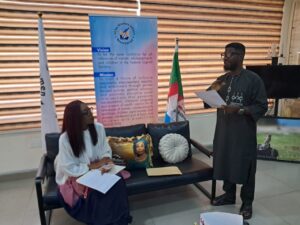
While speaking during the event, the Director of the Solid Waste Management Department (North), Mr. Benjamin Enwerem, said there are high risk health hazards associated with improper handling of healthcare waste generated from healthcare institutions by caregivers and some healthcare workers.
Enwerem said the Board through the Solid Waste Department creates the necessary awareness of the dangers healthcare workers and their families are exposed to if the healthcare waste they come in contact with are not properly handled according to set standards.
‘You may wish to know that many times, health workers, cleaners and visitors do contract diseases and infection through hazardous wastes when exposed to them unprotected.
“The disease or infection so contracted unknowingly can be transferred to their family members when they get home and so can lead to its spread and perhaps epidemics.” Mr. Enwerem said.
The Director further said that the Abuja Environmental Protection Board, through the partnership of the Japan International Cooperation Agency (JICA), has embarked on such training project with the aim of letting healthcare institutions know the need to being well equipped in handling these class of wastes.
In his words “we at the Abuja Environmental Protection Board, in partnership with Health and Environment Secretariat of FCT Administration, are working hard to ensure the reduction of the challenges poor healthcare waste management poses and to scale up the proper treatment of healthcare waste within the Federal Capital City through the project on strengthening capacity for healthcare wastes management in FCT.
According to Mr. Enwerem large amount of waste is generated in healthcare facilities and institutions on a daily basis which are categorized as hazardous and non-hazardous.
“There are waste generated within healthcare institutions like hospitals, clinics, medical laboratories, pharmacies and what have you which are dangerous to health. Wastes like contaminated blood, sharps, needles, swabs, chemicals, human parts, sample containers and tissues are hazardous in nature. They are sometimes ignorantly mixed together with other non-hazardous wastes like plastic bottles and leftover foods eaten by patients and their visitors.”
The Director also said in hospitals and health facilities where there is no separation of these wastes according to its categories but are mixed together, such automatically become hazardous and dangerous to health if not disposed of properly saying adequate sensitization and training is needed to educate healthcare workers on proper ways of handling healthcare waste.
As to whose job it is to finally take care of these waste, Enwerem said it is the Board that has the major responsibility of collecting the waste and disposing them appropriately at designated sites according to set rules of engagement and world standards for such class of waste.
“Before now, there is this committee called Infection Prevention and Control Committee that was responsible for sensitization and training of hospital staff on healthcare wastes management. However, due to the dynamics of society, and the possibility of hospitals having new recruits as staff who may not have these requisite knowledge, we retrain them from time to time to ensure the proper thing is done always”, Enwerem said.
‘We emphasize on the need of sorting the wastes appropriately as they are generated; wearing thick hand gloves and overalls; using different bins according to accepted world healthcare standards for hazardous and non-hazardous wastes; discouraging waste pickers from sorting and using bottles from hospitals for household usage or storing drinks’.
He said that the Department do carry out routine inspection to share modern practices in healthcare wastes disposal; ensure health institutions are in total compliance with the current healthcare wastes management practices.
The Director advised residents to ascertain that bottles used in packaging local drinks like zobo are not picked from among healthcare wastes as such may have been containers used to collect samples like sputum, urine from patients.
He also called on healthcare workers and owners of health facilities to work in synergy with Abuja Environmental Protection Board in ensuring that the wastes generated from their facilities are properly disposed of and to desist from burning the wastes themselves, as this may not totally kill some of the pathogens and will also cause pollution.