FCT PUBLIC HEALTH DEPARTMENT ROLLOUT LASSA FEVER AWARENESS CAMPAIGN
By: Khadijat Kawunda
The FCT Public Health Department’s Health Promotion and Education Division is taking proactive steps to curb the spread of Lassa Fever in offices, communities, and marketplaces in the FCT.
This initiative aims to educate staff on the disease, its prevention, and control measures, following recent suspected cases in the FCT.
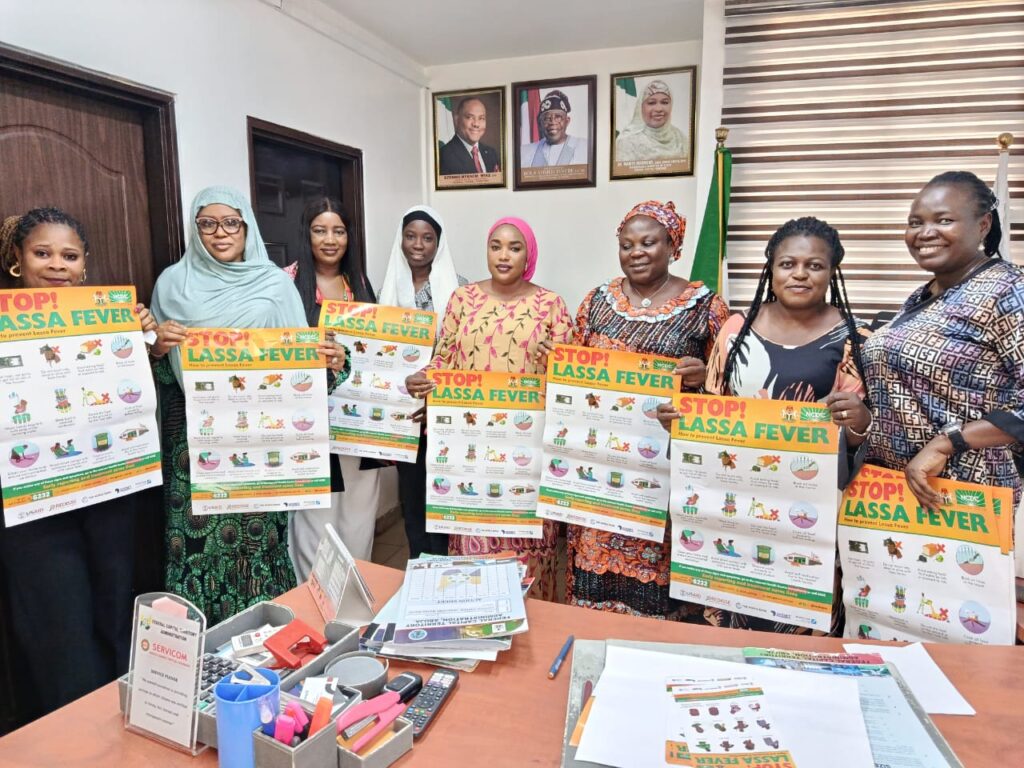
The advocacy and sensitization campaigns, which started on Monday, 23rd February 2026, with visits to various offices, including the offices of the Director of School Services, Secondary Education Board, DG FCT waterboard, and Director Pension Board.
Speaking during the visit, a Health Educator, Deborah Azeez, who represented the Head of Division, Health Promotion and Education, Public Health Department, Hajiya Hawa Suleiman explained in detail that Lassa Fever is a viral hemorrhagic fever common in West Africa, transmitted through contact with infected rodents or person-to-person contact with bodily fluids.
Suleiman further discussed the Symptoms of Lassa fever, which include fever, headache, and muscle pain. She added that to prevent Lassa fever, everyone should avoid rodents, practice personal and environmental hygiene, and steer clear of infected individuals’ fluids.
Thus, Suleiman encourages blocking all openings that rodents could have access to the offices and homes.
She noted that it is important for everyone to visit the nearest health facility if they experience any symptoms, as Lassa Fever treatment is free in all government hospitals in the FCT.
Additionally, Lassa Fever typically peaks during the dry season, between November and May, with the highest cases usually reported between January and April.
The team is expected to continue its sensitization campaigns in Garki, Utako, Wuse Market, Dei Dei, Zuba, Gwagwa, amongst other communities in the FCT throughout this season.
The Nigeria Centre for Disease Control and Prevention (NCDC) has reported 70 deaths and 318 confirmed cases in the first seven weeks of 2026, with 15 healthcare workers infected. They’re urging Nigerians to seek medical attention immediately if symptoms persist.