FCTA REAFFIRMS COMMITMENT TO CHILD NUTRITION FUND, SIX-MONTH MATERNITY LEAVE
By: Prudence Okonna
The Federal Capital Territory Administration (FCTA) has reaffirmed its commitment to strengthening nutrition interventions and improving maternal and child health through the proposed adoption of the Child Nutrition Fund (CNF) and the implementation of a six-month paid maternity leave for nursing mothers in the Federal Capital Territory.
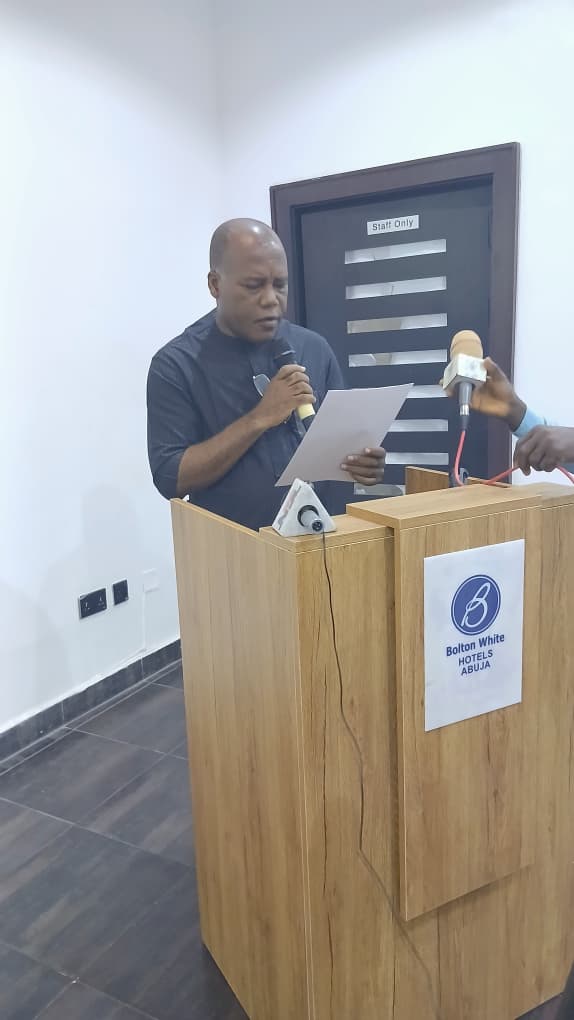
The commitment was reiterated during a stakeholders’ breakfast meeting on Thursday, March 12, 2026, where government officials, development partners and civil society organisations discussed strategies to address child malnutrition and enhance support for working mothers in the FCT.
Speaking at the meeting, the Mandate Secretary of the Economic Planning, Revenue Generation and Public-Private Partnership Secretariat (EPRGPPP) of the FCTA, Ubokutom Nyah, said the administration was determined to advance policies that promote the well-being of children and families.
The Mandate Secretary, who was represented by his Technical Assistant, Uwem Jonah Usem, noted that the adoption of the Child Nutrition Fund would provide a strategic framework for improving access to nutrition commodities for children, particularly those in rural and underserved communities across the territory.
According to him, the proposed six-month maternity leave for lactating staff is also a critical intervention that would enable nursing mothers to properly care for and breastfeed their babies during the crucial early months of life, while also supporting the productivity and welfare of female employees within the civil service.
He therefore called on all stakeholders to work together urgently to ensure the initiatives are adopted.
He said, “Let us work together with urgency and purpose to see these initiatives adopted and implemented for the benefit of all.”
The Director of Food and Nutrition in the Secretariat, Celina Gaza-Oluwafemi, said the FCTA was already engaging key partners and stakeholders to ensure the successful adoption and implementation of the initiatives.
She explained that the Child Nutrition Fund would enable the territory to access additional resources through a matching funding mechanism supported by partners such as UNICEF, which doubles government investment in essential nutrition commodities.
She stressed that tackling malnutrition requires collaboration across sectors, noting that improving nutrition outcomes depends on coordinated efforts by various Secretariats, Departments and Agencies, as well as development partners.
Also speaking, Programme Manager of Civil Society–Scaling Up Nutrition in Nigeria (CS-SUNN), Ridwan Owosoya, commended the FCTA for engaging stakeholders and demonstrating readiness to prioritise nutrition.
He explained that the Child Nutrition Fund is designed to support governments in scaling up life-saving nutrition interventions through a matching funding model that increases the availability of essential nutrition commodities.
Owosoya added that once the FCT joins the fund, implementation can be carried out through existing primary healthcare structures across communities.
A representative of UNICEF, Chizoba Steve-Edemba, noted that despite being Nigeria’s capital, the FCT still records cases of severe and moderate acute malnutrition among children, making sustained investment in nutrition programmes critical.
She disclosed that about 20 states have already keyed into the Child Nutrition Fund since 2023, mobilising significant resources for nutrition interventions, while 17 states across Nigeria have adopted six-month paid maternity leave for civil servants.
The nutrition specialist urged the FCTA to sustain its commitment by providing dedicated funding for nutrition programmes and strengthening policies that support mothers and children across the territory.
Abuja Digest reports that stakeholders at the meeting called for the allocation of 0.5 per cent of the FCT budget to nutrition, the institutionalisation of nutrition programmes across Secretariats, Departments, and Agencies (SDAs), the approval of six months paid maternity leave for working women, and the provision of counterpart funding to enable the FCT to key into the Child Nutrition Fund.