FCTA REAFFIRMS COMMITMENT TO MALARIA ELIMINATION AS ADVOCACY CORE GROUP MEETS
…SAYS MALARIA TESTING AND TREATMENT IS FREE
By: Prudence Okonna
The Federal Capital Territory Administration (FCTA), through its Malaria Elimination Programme, has reaffirmed its commitment to strengthening community engagement and driving coordinated action towards ending malaria in the FCT.
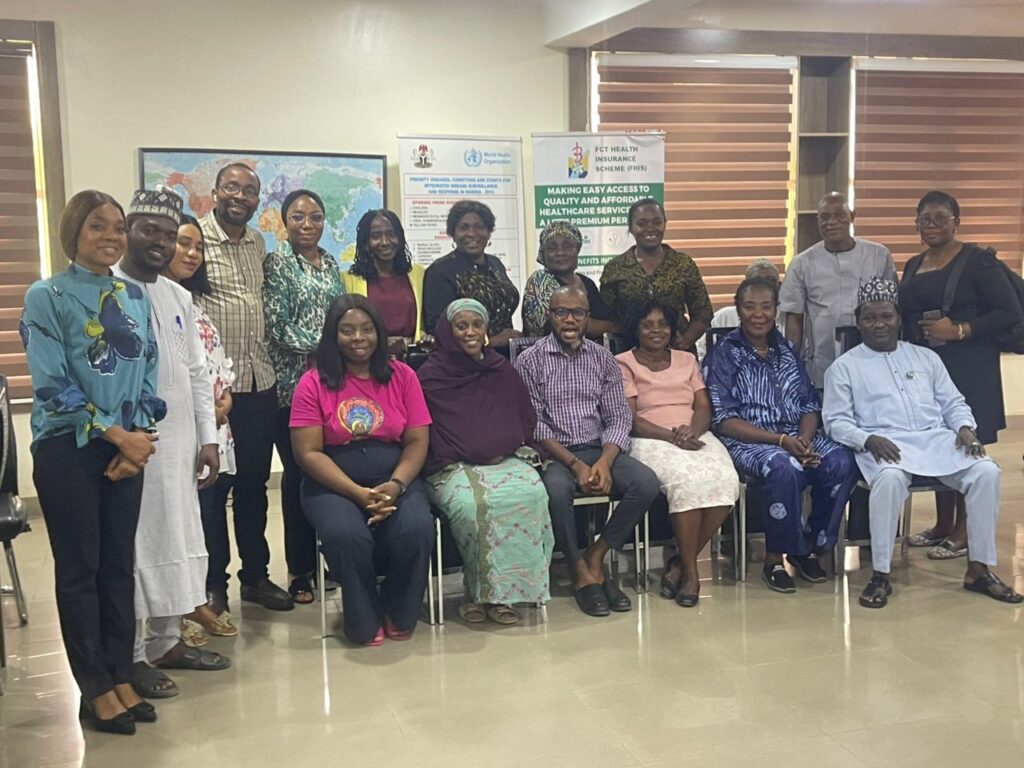
The FCTA reaffirmed this commitment during the FCT Malaria Elimination Programme Advocacy, Communication and Social Mobilisation (ACSM) Core Group meeting held recently.
The Programme Manager, Malaria Elimination Programme, Public Health Department, Health Services and Environmental Secretariat (HSES), Hajiya Zainab Ibrahim, emphasised the central role of community structures, partners, and stakeholders in achieving malaria elimination targets.
Addressing participants, she noted that malaria control remains a collective responsibility, stressing that the disease affects communities, societies, and every household, emphasising that an effective malaria response cannot be driven by a single institution.
“The malaria programme is not one person’s programme. It is for all of us because it affects almost everybody. Mosquitoes are everywhere, so we need you as advocates. The ACSM core group is very important in passing information and advocating for more resources and support,” she said.
Ibrahim explained that the complexity of malaria interventions requires the active participation of partners, health educators, community structures, and other stakeholders, adding that the meeting was convened to strengthen coordination and ensure that partners work in synergy rather than in isolation.
According to the Programme Manager, community engagement remains the backbone of malaria interventions in the territory.
In her words: “Community engagements and social mobilisation activities go a long way in informing community members, mobilising them to access care, and keeping them aware of programme activities,”.
“Let us deliberate on the way forward so that we can improve the malaria programme in the FCT. Our goal is to eliminate malaria,” Ibrahim said.
She commended partners who recently joined field teams to monitor ongoing interventions, including the Malaria Consortium through the Seasonal Malaria Chemoprevention (SMC) programme and community mobilisation efforts under the FamKris project funded by the Islamic Development Bank.
She further highlighted the existence of a grievance redress mechanism that empowers community members to report denial of care or any barrier to accessing malaria services.
“If someone is prevented from accessing care, whether by a spouse or any other barrier, they are free to report. No one should be denied the right to get tested or treated for malaria,” she said.”
The PM revealed that complaint boxes are stationed across all FCT health facilities to channel grievances and complaints of denied care, and called on residents to take advantage of the opportunity.
The Chair of the ACSM Malaria Core Group, Samuel Simon, reiterated the need for harmonisation and integration of health interventions across partners.
He noted that with dwindling global resources, unified communication and coordinated action at the state level have become more crucial than ever.
“The only way out is for us to speak with one voice. We are already moving towards integration, and this should reflect in our planning and implementation.” He reiterated.
The ACSM lead at the Public Health Department, Salamatu Nagogo, explained that the aim and objectives of the ACSM malaria core group are to reduce malaria prevalence, to possibly eliminate malaria and generally improve the health care system.
In her words: “We at the ACSM branch achieve this through awareness creation and improved surveillance and monitoring. This helps us make informed decisions and guide interventions.”
Nagogo revealed that it was through this monitoring exercise that the team found out recently on the field that community members were not accessing the free malaria testing and treatment. Abuja Digest reports that the ACSM Core group held its inaugural meeting on September 13, 2024, to provide a platform to guide and coordinate the inputs of the Roll Back Malaria (RBM) Partnership members in the design and implementation of strategies to increase resources and action for malaria control in the States, especially concerning Advocacy, Communication, and Social Mobilisation