MINISTER’S INFRASTRUCTURAL DRIVE HAS INCREASED ACCESS TO RURAL COMMUNITIES — ES, FCT-PHCB
…As Stakeholders Call for Increased Nutrition Budget Line in the FCT
By: Prudence Okonna
The Executive Secretary of the FCT Primary Health Care Board (FCT-PHCB), Riqqaya Wamako, has said that the infrastructural drive of the FCT Minister, Nyesom Wike, has improved security and increased access to rural communities, bringing Primary Health Care Centres closer to the people.
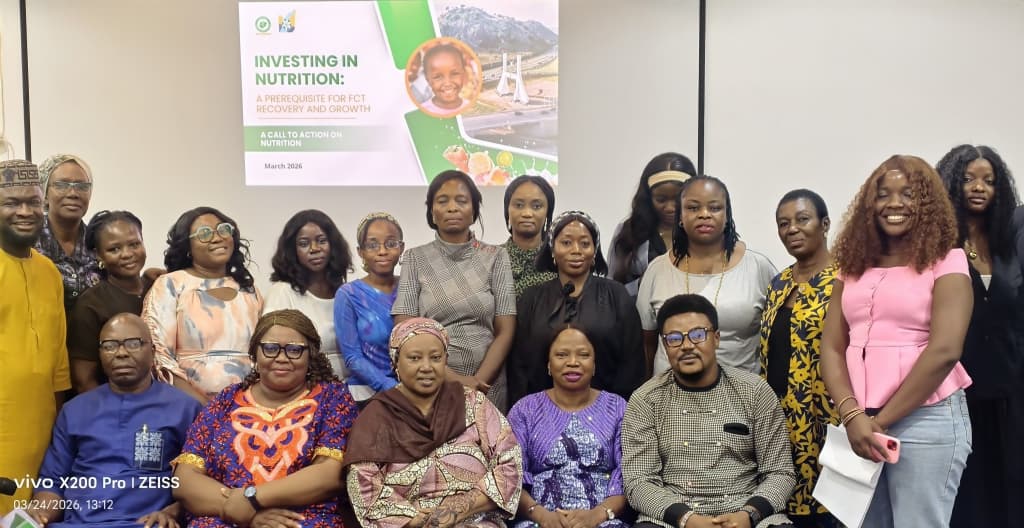
She made this known during a one-day state-level media dialogue and stakeholder engagement on the Child Nutrition Fund (CNF) and the implementation of six-month paid maternity leave in the FCT, organised by Civil Society-Scaling Up Nutrition in Nigeria on Tuesday, March 24, 2026.
CS-SUN is a non-governmental organization, non-profit making alliance, made up of organisations with a shared vision to transform Nigeria into a country where every citizen has food and is nutrition secured.
Wamako explained that, prior to the recent infrastructural improvements, many rural communities were difficult to access.
She noted that while access has significantly improved, there is a need to increase the supply of nutrition commodities to cater to the teeming population, especially children under five, who risk poor growth and development if not adequately nourished.
The Executive Secretary further emphasised that the growing population in the FCT calls for expanded nutrition services for children and women of childbearing age, particularly pregnant women.
Wamako therefore called on development partners to sustain their support in bridging existing gaps.
Also speaking, the Executive Secretary of Civil Society-Scaling Up Nutrition in Nigeria, Sunday Okoronkwo, urged the FCT Administration to prioritise nutrition as a key driver of development, warning that failure to do so could have long-term economic and social consequences.
The ES who was represented by the Communications Manager, Peters Olushola highlighted the burden of malnutrition in the FCT, stressing that it not only threatens child survival and development but also undermines national productivity. According to him, poorly nourished children are more likely to earn less as adults and contribute less to economic growth.
Okoronkwo also called on the FCT to leverage the Child Nutrition Fund (CNF) to scale up critical nutrition interventions and improve access to essential services, particularly within the first 1,000 days of a child’s life.
He advocated for the urgent implementation of six-month paid maternity leave, describing it as a proven strategy to support exclusive breastfeeding, improve child health outcomes, and strengthen the workforce.
While acknowledging existing health infrastructure in the FCT, he stressed the need for stronger political will, increased funding, and coordinated action.
Meanwhile, the Director Department of Nutrition, Economic Planning, Revenue Generation and Public-Private Partnership (EPRGPPP), Celina Oluwafemi, disclosed that efforts are ongoing to ensure that all Secretariats, Departments, and Agencies (SDAs) establish dedicated budget lines to improve the provision of nutrition services across the FCT.
The State Nutrition Officer, FCT, Chinyere Ekwueme, in her presentation, also underscored the need for sustained interventions to address malnutrition.