NIGERIA COMMITS TO STRENGHTEN WOMEN’S ACCESS TO JUSTICE AFTER CSW70 REVIEW IN ABUJA
By: Kemi Adeyemi
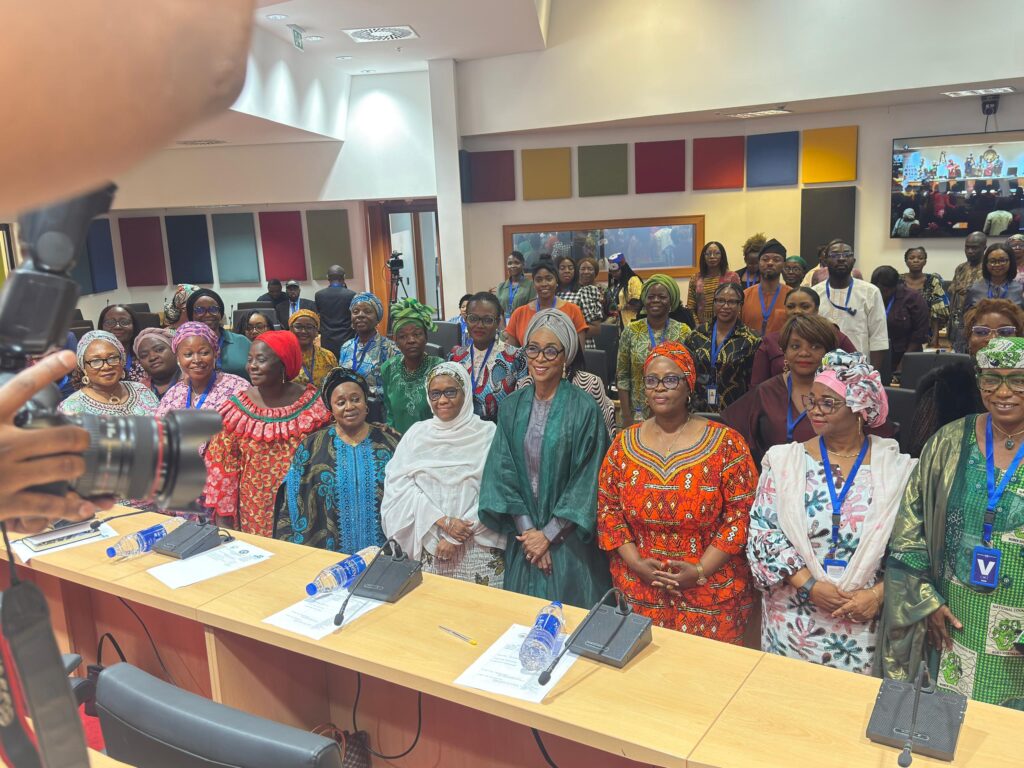
Nigerian women leaders, government officials, civil society actors, and international partners have reaffirmed their commitment to advancing women’s access to justice, as stakeholders convened in Abuja for a high-level post CSW70 engagement.
The event, organised by the Federal Ministry of Women Affairs and Social Development in collaboration with UN Women, reviewed Nigeria’s participation and outcomes from the 70th Session of the Commission on the Status of Women (CSW70), held in New York in March 2026.
The session focused on strengthening access to justice for women and girls through inclusive legal systems, elimination of discriminatory laws, and dismantling structural barriers, issues that strongly reflect Nigeria’s realities.
Speaking at the FCT Women O’Clock Post-CSW70 Leadership Meeting held at the UN House in Abuja, UN Women Country Representative to Nigeria and ECOWAS, Beatrice Eyong, emphasised that rights, justice, and action remain central to sustainable development.
She commended Nigeria’s active role at CSW70, particularly its leadership in economic empowerment and the fight against gender-based violence (GBV).
Quoting the Universal Declaration of Human Rights, Eyong questioned why women and girls still lack full rights and freedoms in the 21st century, calling for stronger implementation of frameworks such as the Maputo Protocol, increased funding for women-focused programmes, and the elimination of discriminatory practices.
She also highlighted Nigeria’s innovation in establishing a private sector-led GBV fund, the first in ECOWAS and urged accelerated passage of the Special Seats for Women Bill to boost women’s political representation.
Representing the Minister of Women Affairs, Imaan Sulaiman-Ibrahim, Special Assistant on Technical Matters, Princess Jumai Idonije, outlined progress under the administration of Bola Ahmed Tinubu.
She noted that social protection coverage has expanded significantly from fewer than one million households in 2015 to nearly 10 million in 2026 with women accounting for over 70 percent of beneficiaries.
She highlighted key initiatives including the Renewed Hope Social Impact Intervention (RHSII 774), the Nigeria for Women Programme supported by the World Bank, and the Happy Woman App, which addresses technology-facilitated GBV.
She also cited a case of coordinated institutional support for an 11-year-old survivor of sexual violence, underscoring the urgent need for continued action.
Also speaking, Mandate Secretary of the FCT Women Affairs Secretariat, Adedayo Benjamins-Laniyi, stressed the importance of translating global commitments into measurable local impact.
She highlighted FCT-specific initiatives such as the Abuja Accelerators Programme, which equips women with skills and leadership opportunities, and the Great Shedder Aqua Women’s Project, which supports women fish processors with infrastructure, equipment, and market access.
Dr. Benjamins-Laniyi further referenced a landmark declaration signed on January 21, 2026, by the 17 Tribal Chiefdoms in the FCT, abolishing harmful practices including child and forced marriage, rape, domestic violence, and other forms of GBV. The declaration mandates both traditional sanctions and legal prosecution under the Violence Against Persons (Prohibition) Act 2015.
Describing localisation as the true measure of progress, she unveiled plans for an “FCT Women O’Clock” implementation framework to track and drive the execution of CSW70 resolutions across communities such as Karu, Gwagwalada, Kuje, Abaji, and Bwari.
She noted that success would not be judged by policy discussions alone but by visible improvements safer communities, stronger livelihoods for women, enhanced protection systems for vulnerable groups, and more inclusive governance structures.
In her remarks, Director-General of the National Agency for the Prohibition of Trafficking in Persons (NAPTIP), Binta Lami Adamu Bello, urged women to move beyond dialogue to decisive action, encouraging them to demand accountability and actively engage leadership structures.
The meeting concluded with a strong call for sustained multi-stakeholder collaboration, bringing together government institutions, civil society, traditional leaders, the private sector, and male allies to ensure that commitments made on the global stage translate into meaningful change for women and girls at the grassroots level.