FCT COE MUSLIM WOMEN GROUP HOSTS RAMADAN LECTURE
By: Halimah Yahaya
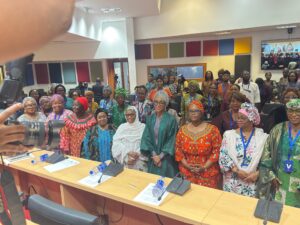
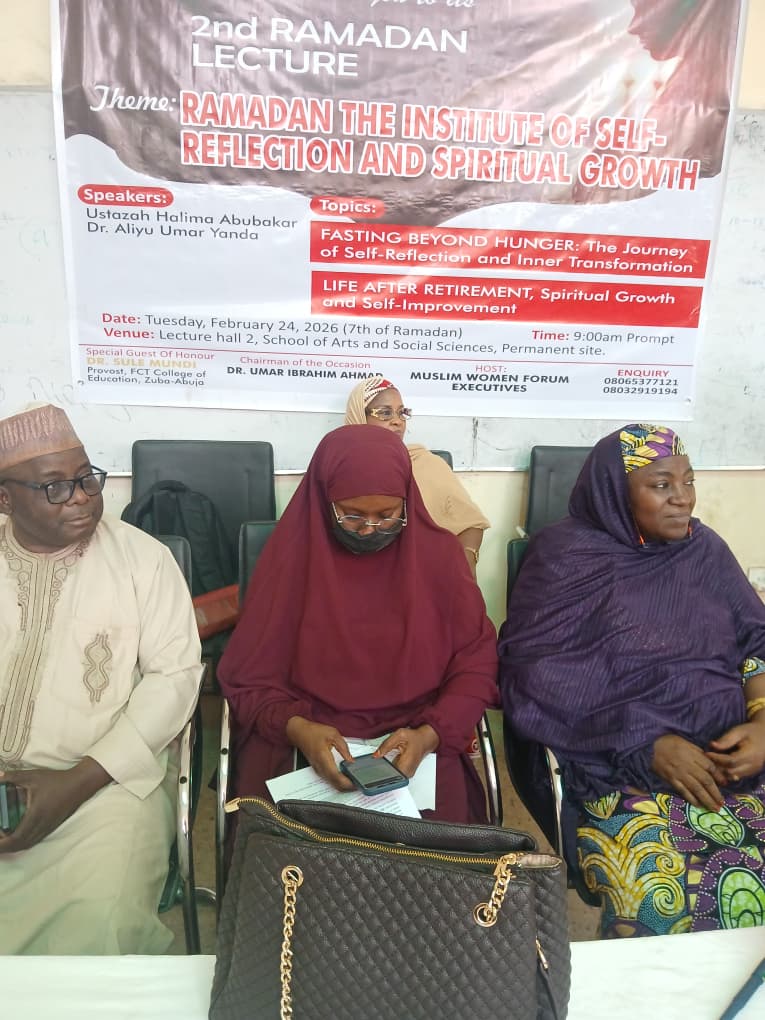
In a reflective gathering marked by spiritual insight and communal warmth, the Muslim Women group of the FCT College of Education, Zuba-Abuja, recently organised a Ramadan Lecture themed “Ramadan: The Institute of Self-Reflection and Spiritual Growth.”
The event, which drew members of the academic community and college staff, underscored the significance of Ramadan as a period of introspection, moral renewal, and spiritual elevation.
Representing the Provost, the Deputy Provost (Academics), Dr. Habib Babajo, in his opening remarks, commended the organisers for convening a programme of such spiritual and intellectual value. He described Ramadan as a sacred season of blessings, compassion, and generosity, urging Muslims to cultivate the habit of charity.
According to him, the essence of the holy month extends beyond fasting, encompassing acts of kindness, empathy, and support for others, regardless of the scale of such gestures.
Also addressing the participants, the Deputy Provost (Administration), Dr. (Mrs.) Gbemisola Olotu emphasised the importance of embracing the spiritual opportunities inherent in Ramadan. She encouraged the Muslim women to use the period as a time for renewed devotion, self-discipline, and conscious personal growth.
Earlier, in her welcome address, the Ameerah, Hajia Safiya Abubakar, described Ramadan as a profoundly transformative month. She noted that the season offers believers a unique opportunity for deep reflection, self-assessment, and realignment with moral and spiritual ideals.
Delivering a lecture titled “Fasting Beyond Hunger: The Journey of Self-Reflection and Inner Transformation,” Ustazah Halimah Abubakar provided thought-provoking insights into the deeper meaning of fasting. She stressed that Ramadan is not intended as a period of deprivation, but rather as a pathway to spiritual elevation and inner refinement.
She explained that fasting serves as a discipline of the ego, encouraging believers to develop self-restraint, heightened consciousness, and moral clarity.
In a moment that resonated deeply with the audience, the lecturer posed reflective questions designed to provoke personal evaluation, including: “Who am I when no one is watching? What habits exert the greatest control over me? What good deeds do I postpone? If Ramadan ended today, what would I regret?”
In the second lecture, Dr. Yanda Aliyu, Imaam of Uthman ibn Affan Mosque, Wuse II, spoke on “Life After Retirement: Spiritual Growth and Self-Improvement.” He urged participants to cultivate enduring spiritual values that transcend professional life, highlighting the need for purposeful living and sustained personal development.
Dr Aliyu further cautioned against behaviours that undermine the spiritual benefits of fasting, particularly gossip, which he noted diminishes the essence and rewards of Ramadan.
The event also featured moments of recognition and goodwill. A felicitation was held in honour of the Registrar following her substantive confirmation, while gifts were presented to Dr. Aisha Abu in appreciation of her meritorious service to the College upon her retirement.
As part of the humanitarian dimension of the programme, Ramadan packages were distributed to casual staff of the College, reflecting the values of compassion and generosity associated with the holy month.