FCT DIGITALISES 2025/2026 SCHOOL CENSUS, TARGETS ACCURATE DATA FOR BETTER EDUCATION PLANNING

By: Hauwa Mahmud Madugu
The FCT Education Secretariat has commenced the 2025/2026 Annual School Census (ASC), deploying trained enumerators, tablets and a real-time dashboard to generate accurate and verifiable data for improved education planning and service delivery across the Federal Capital Territory.
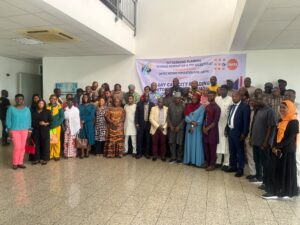
The exercise was flagged off on Thursday, 10th September by the Mandate Secretary for Education, Dr. Danlami Hayyo, who stated that the digitalisation of the census was part of the Secretariat’s renewed efforts to ensure that education decisions were based on accurate, timely and verifiable data.
He said the FCT Administration, under the leadership of the Honourable Minister of the FCT, HE Ezenwo Nyesom Wike, remained committed to delivering quality, inclusive and accessible education to every child in the Territory.
According to Dr. Hayyo who was ably represented by the Permanent Secretary, Education Secretariat, Mrs. Joy Chinwe Okeke, “quality planning without quality data is like building without a foundation,” stressing that the census would provide government with reliable information on learners, school locations, available resources and existing gaps.
He said the data would guide teacher deployment, classroom construction, provision of learning materials, learner tracking and interventions to improve school safety.
The Mandate Secretary added that the census data would feed directly into the FCT Learner Registry, helping authorities track children in school, reduce the number of out-of-school children and ensure that no learner was left behind.
Also speaking at the event, the Head of the FCT Civil Service, Mrs. Nancy Sabanti, said the Annual School Census was vital to the FCT Administration’s commitment to evidence-based planning and the delivery of accessible, safe and quality education.
Mrs. Sabanti, who was represented by the Director, Reforms, Coordination and Service Delivery, Dr. Jummai Amodu, emphasized that accurate data enables administrators to determine the number and location of schools as well as the number of children enrolled, thereby providing the basis for effective planning and budget allocation.
The Head of Service commended the Department of Policy, Planning, Research and Statistics (DPPRS) for the timely exercise, noting that the quality of government decisions depended largely on the reliability of the information collected.
Speaking in an interview after the ceremony, the Director, DPPRS, Mr. Abunike Joseph O., explained that the significance of the annual exercise went beyond simply collecting figures.
He said the census was designed to provide accurate, reliable, primary, and verifiable data for education planning, reporting, and interventions, noting that quality data would lead to more effective planning and improved educational outcomes.
Mr. Abunike disclosed that the exercise would cover all primary and secondary schools within the territory. In his words, “this exercise would cover all learning spaces below the tertiary level, including public, private and faith-based schools, from basic education through secondary education.”
He further revealed that the Digital Nigeria Education Management Information System (DNEMIS) portal had been opened for schools to upload their census information and would close on 30th September 2026, urging all schools to complete their submissions before the deadline.
Earlier in his welcome address, Mr. Abunike urged Head Teachers, Principals and School Data Desk Officers to ensure that the information supplied was accurate, stressing that the success of the exercise depended on the quality of data provided.
The Director also called on school heads, LEA Chairmen and development partners to give the exercise their full cooperation, while the Mandate Secretary warned that data falsification and unnecessary delays would not be tolerated.
The 2025/2026 Annual School Census is expected to provide the FCT with credible education data to strengthen evidence-based planning, resource allocation, learner registration, infrastructure development and interventions aimed at improving the quality and safety of schools across the Territory.