FCT SCHOLARSHIP, STAKEHOLDERS, LAUD WIKE’S LEADERSHIP, APPEAL FOR INCREMENT IN AWARDS
By: Gloria Isah and Wisdom Acka
Key stakeholders in the Federal Capital Territory (FCT) education sector have commended the FCT Minister, Barrister Nyesom Wike, for his transformative leadership and unwavering commitment to educational and general development in the nation’s capital.
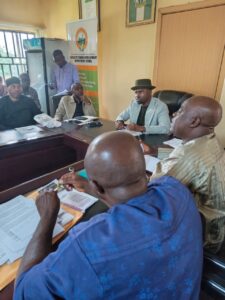
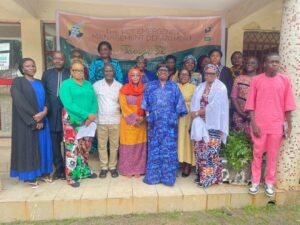
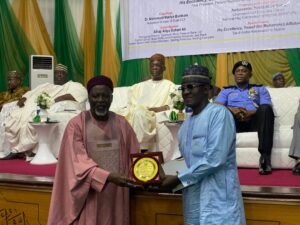
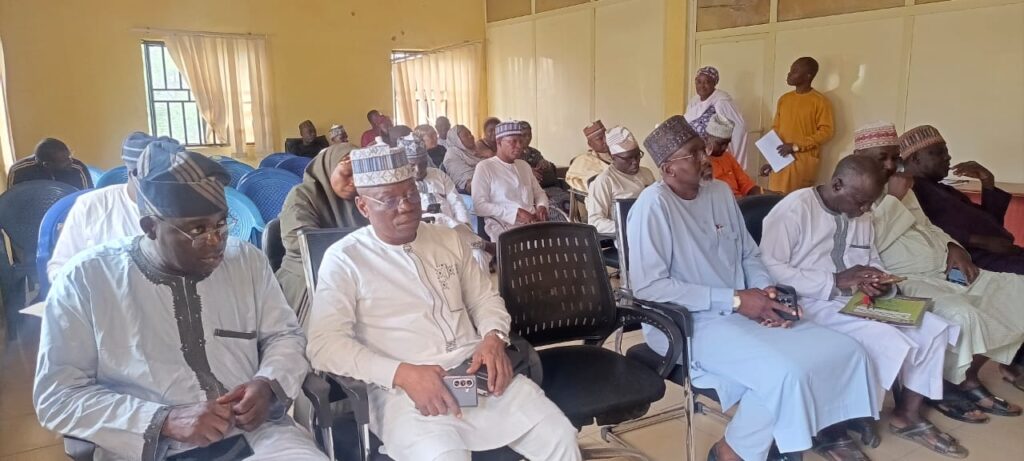
The commendation was the highlight of a critical stakeholders’ meeting convened by the FCT Scholarship Board on Thursday, 16 July, 2026, to brainstorm on a seamless and successful 2025/2026 scholarship session for indigent FCT residents and indigenes.
While praising the Minister’s strides in infrastructural and social development across the Territory, stakeholders and Board officials made a passionate, soft appeal to Barrister Wike for an upward review of scholarship award rates.
They noted that an increment has become necessary to cushion current economic realities and ensure that a larger number of brilliant but less-privileged students benefit from the scheme.
Opening the session, Director of the FCT Scholarship Board, Mrs. Hannah Peter David, welcomed the attendees, describing their presence as a demonstration of their deep commitment to the future of FCT’s youth.
”The FCT Scholarship Board remains committed to its mandate of identifying and supporting indigent, brilliant, and deserving students within the Federal Capital Territory, providing them with the financial support they need to pursue their educational goals without undue hardship,” Mrs. David stated.
She emphasized that the meeting was aimed at reviewing past processes, correcting previous errors, and mapping out a transparent and efficient roadmap for the 2025/2026 cycle.
The Director outlined key objectives for the session, which include: reviewing timelines and modalities for the 2025/2026 applications, deliberating on wider sensitization strategies, especially in hard-to-reach rural communities across the six Area Councils, as well as strengthening collaboration to eliminate duplication and ensure only genuinely deserving students benefit.
Mrs. David stressed that application forms would only be issued to fresh applicants and not those with pending issues, warning that the Board cannot achieve its goals in isolation.
“The task of nurturing our future leaders is one that no single agency can accomplish alone,” she noted.
During the interactive session, representatives of traditional institutions, from Etsu Bwari and the Aguma of Gwagwalada, raised concerns regarding non-receipt and delays in receiving payment alerts for some previously successful applicants.
They sought clarification on whether the bottleneck originated from the Board, commercial banks, or the FCT Treasury. Responding, Mrs. David explained that the delays were largely due to errors made by the applicants themselves.
She revealed that no fewer than 48 applicants had their funds returned due to wrong account details, the submission of parents’ accounts, or the use of microfinance and fintech accounts like OPay and Moniepoint, which are not compatible with the payment system.
To resolve this, the Director noted that the Board took the pains to call the affected students individually to correct their details, after which their payments were successfully processed.
To prevent a recurrence, she issued guidelines for the upcoming cycle, including use of only commercial banks, non-use of third-party account details, possession of five credits including Mathematics and English Language, and early submission of application forms
Addressing the funding limits of the Board, Mrs. David explained that the scholarship disbursements rely entirely on the FCTA budget, adding that under the current policy document, the distribution formula stands at 80 per cent for indigent indigenes and 20 per cent for indigent residents, cutting across basic, post-basic, tertiary, and foreign education.
”What we normally give as scholarships is solely from the FCTA budget, which is why we cannot reach every deserving student,” the Director explained. “Our collective prayer and appeal to our worker-friendly Minister, Barrister Nyesom Wike, is for an increment in the budget so we can expand this safety net to more of our children.”
Stakeholders echoed this sentiment, gently pleading with the Minister, known for his deep empathy and passion for human capital development, to consider an upward review of the subvention.
They argued that such a gesture would secure the future of thousands of youths who look up to the administration for their educational survival.
The discussion also veered into the urgent need for technical and vocational skills acquisition. The representative of the Aguma of Gwagwalada emphasized the need for proper guidance and sensitization during the registration process, while advocating for the establishment of skills acquisition centers across all Area Councils.
In his remarks, the President of the All-Nigeria Confederation of Principals of Secondary Schools (ANCOPSS), FCT Chapter, Dr. Jiya Mohammed Umar, lauded traditional rulers for their support of education. He specifically praised the Etsu Kwali for personally sponsoring about 15 indigent children in secondary schools under the scholarship scheme.
Delivering the vote of thanks, the Board’s Head of Department for the Scholarship Award Division, Alice Isah, thanked the traditional rulers, community leaders, and administrators for braving the heavy rains to attend the meeting.