FCTA LAUNCHES MATERNAL AND CHILD HEALTH PROJECT TO TACKLE MALNUTRITION DURING FIRST 1000 DAYS OF LIFE
By: Prudence Okonna
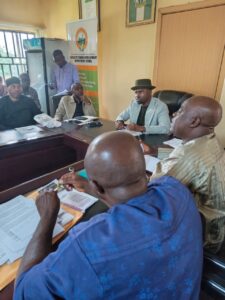
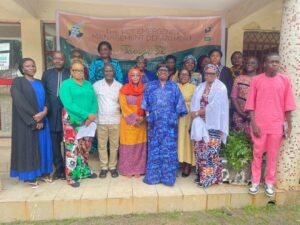
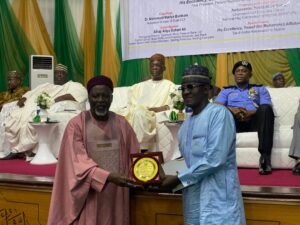
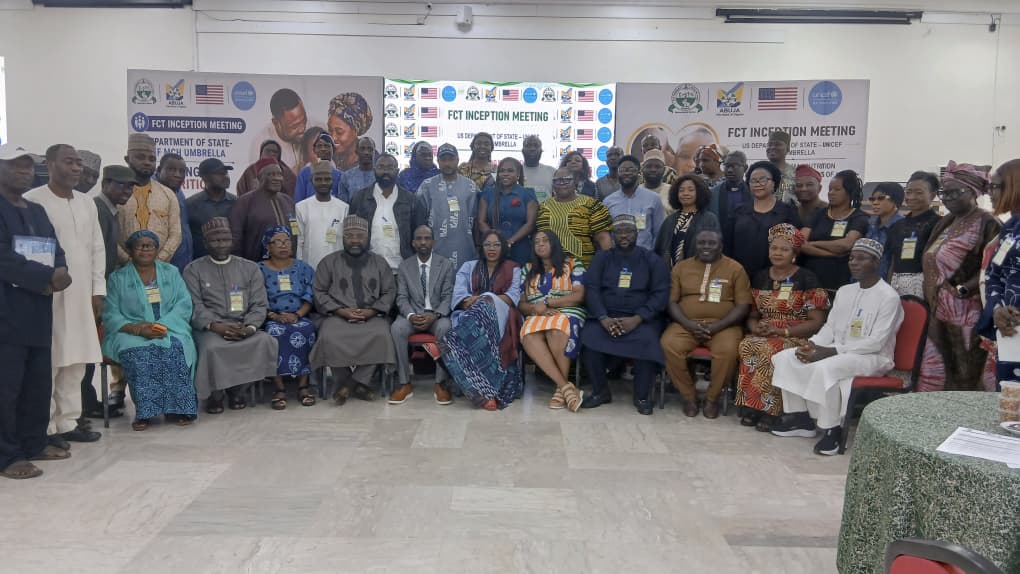
The Federal Capital Territory Administration (FCTA), in collaboration with UNICEF and the United States Department of State, has launched the Maternal and Child Health (MCH) Umbrella Grant Project aimed at tackling malnutrition during the first 1000 days of life across the FCT.
The first 1000 days of life include 270 days of pregnancy, 180 days of infancy (0-6months), and 550 days of toddlerhood (7-24 months), during which the brain, body systems, and cognitive functions develop at the fastest pace.
Speaking at the inception meeting of the project on Thursday, June 25 2026, the Mandate Secretary, Health Services and Environment Secretariat, Dr Adedolapo Fasawe, described the initiative as a significant step toward strengthening nutrition governance, financing, service delivery, and community engagement to address persistent nutrition challenges affecting women and children.
According to her, the project will enhance coordination among stakeholders, improve data systems, build the capacity of frontline health workers, and promote optimal maternal, infant and young child feeding practices.
“The Maternal Child Health Umbrella Grant Project presents an important opportunity to strengthen nutrition governance and financing, improve service delivery, enhance data and information systems, and promote safe, efficient and sustainable maternal, infant and young child feeding practices,” she said.
Dr Fasawe stressed that despite the FCT’s urban status, many communities continue to face nutrition-related challenges due to poor feeding practices and limited nutrition education.
She recounted an encounter with a malnourished child whose mother regularly purchased expensive processed foods but lacked knowledge about balanced nutrition.
“It became clear that education is missing, even among educated families. Simple locally available foods such as beans, soya and pap provided the nutrition that the child desperately needed,” she noted.
The Mandate Secretary also expressed concern over misconceptions surrounding child nutrition, noting that some communities still perceive obesity in children as a sign of good nutrition.
Dr Fasawe emphasised that investing in women’s health and nutrition remains critical to sustainable development.
“The FCTA recognises the critical importance of investing in the health and nutrition of women because a well-nourished mother would and a well-educated mother would always bring up a well-nourished and educated child.” She explained.
Also speaking, UNICEF’s Nutrition Manager, Summit Khan, described the grant as a catalyst for strengthening ongoing nutrition interventions, particularly those focused on preventing malnutrition during the first 1,000 days of life, from pregnancy through a child’s second birthday.
He explained that the programme seeks to improve food and nutrition security, maternal health, child survival, and long-term economic productivity through evidence-based interventions.
“The first 1,000 days represent a critical window of opportunity to reduce stunting, improve nutritional status and enhance child survival,” he said.
The UNICEF official noted that the project is being implemented in eight states, including the FCT, and will focus on pregnant women, lactating mothers and children under two years of age.
He explained that the programme is built around three major components: strengthening nutrition governance and financing; improving health, food and social protection systems; and enhancing community engagement and behaviour change communication.
Among key interventions are the promotion of Multiple Micronutrient Supplements (MMS) for pregnant women, which the Federal Government has adopted to replace Iron-Folic Acid supplementation, and the introduction of Small Quantity Lipid-Based Nutrient Supplements (SQLNS) for young children to improve dietary quality.
Khan urged government agencies and implementing partners to accelerate implementation given the project’s relatively short duration, stressing that timely results could attract additional donor support.
In his remarks, the acting Executive Secretary, FCT Primary Health Care Development Board (FCT-PHCB), Dr Dan Gadzama, reiterated that nutrition is everyone’s responsibility and called for stronger collaboration among government agencies, civil society organisations, professional bodies, development partners, community leaders and the media.
He commended UNICEF for prioritising the FCT and assured stakeholders of the administration’s commitment to the project’s successful implementation.
Meanwhile, the State Nutrition Officer, Chinyere Ekwueme, presented the Nutrition Situation Analysis in the territory and revealed that the FCT’s projected population for 2026 stands at 8.3 million, including approximately 1.8 million women of reproductive age, 416,000 pregnant women and 1.6 million children under five years.
According to her, while the FCT records lower stunting and underweight rates than some parts of North Central Nigeria, the territory still faces a significant burden of wasting and poor infant feeding practices.
She disclosed that only 58 per cent of newborns in the FCT are breastfed within the first hour of birth, while exclusive breastfeeding remains low at 29 per cent.
“More than half of children in the FCT are not receiving the recommended feeding practices needed for healthy growth and development,” she said.
Ekwueme further noted that anaemia remains a major public health concern, affecting nearly half of children aged six to 59 months and more than half of women of reproductive age.
She emphasised that prevention remains the most sustainable solution to malnutrition, advocating increased nutrition education, food demonstrations using locally available foods, and stronger multisectoral collaboration.
“Donors will come and go, but our communities will remain. We must focus on preventive approaches that empower families to use available resources to improve nutrition,” she said.