FCTA BEGINS CITY-WIDE DRAINAGE CLEARING, WARNS AGAINST ILLEGAL DEVELOPMENTS, VANDALISM
…Says Demolition of Structures Obstructing Waterways Imminent
By: Wisdom Acka
The Federal Capital Territory Administration (FCTA) has commenced a city-wide desilting and clearing of drainage channels following recent heavy rainfall that triggered flooding in parts of Abuja.
The exercise, aimed at mitigating flood risks during the peak of the rainy season, was inspected on Thursday, September 3, 2026, along the Airport Expressway by the Acting Executive Secretary of the Federal Capital Development Authority (FCDA), Engr. Richard Yunana Dauda.
Engr. Dauda said the exercise was being undertaken on the directive of the FCT Minister, Barrister Nyesom Wike, following the flash flooding recorded along the Airport Expressway on Tuesday.
He explained that although the recent heavy rainfall was consistent with earlier meteorological warnings and broader climate change trends, the Abuja Master Plan had made provisions for flood-prone areas, including portions of the Airport Expressway corridor.
According to him, the city’s drainage infrastructure was originally designed to accommodate significant volumes of stormwater, but its effectiveness had been compromised by human activities, particularly indiscriminate waste disposal and illegal developments.
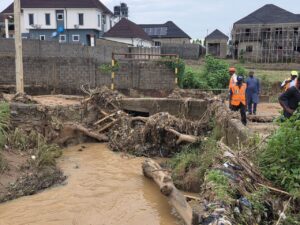
“Some of these drainage facilities over time have been silted. Part of the cause is residents dumping refuse into drainage channels. When rain falls, it washes down polythene bags, waste, and even large objects that block the outlets,” he said.
The Acting Executive Secretary identified illegal development and infrastructure vandalism as two major human factors contributing to the increasing incidence of flash floods in the city.
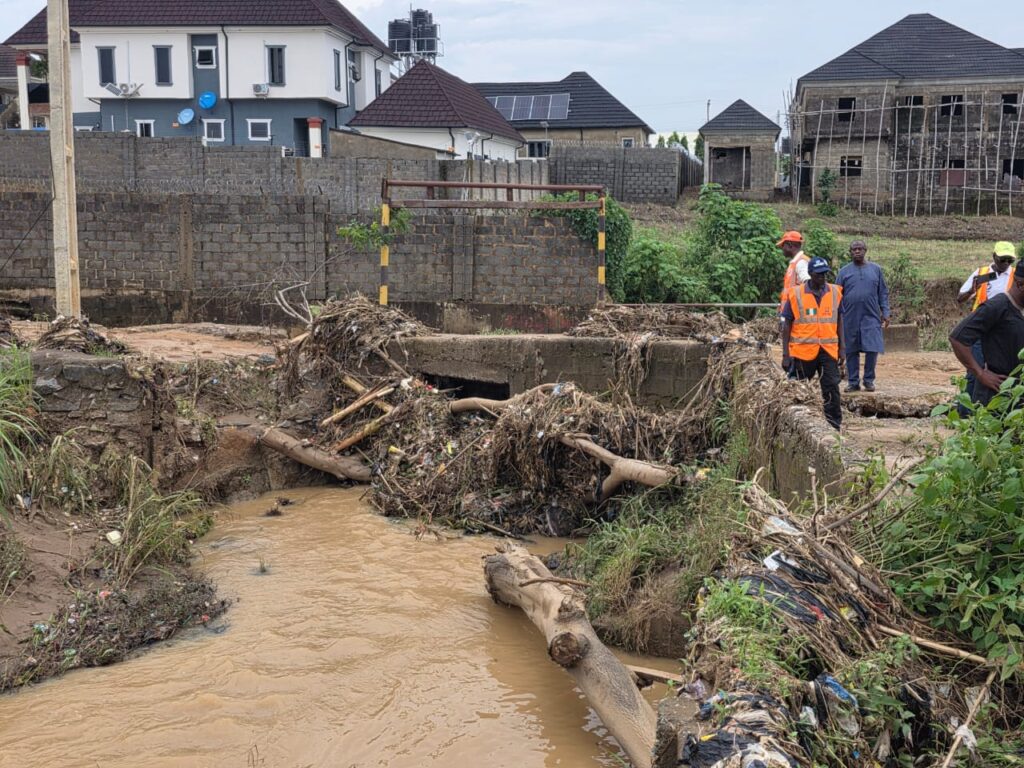
At one of the critical points along the Airport Expressway, Engr. Dauda drew attention to a triple-cell box culvert designed to discharge a substantial volume of water from the Galadima Roundabout.
He disclosed that a private developer had allegedly constricted the waterway downstream by erecting retaining walls in an attempt to expand a private plot.
He explained that the obstruction had reduced the channel’s capacity, resulting in water detention and backflow, which eventually caused flooding.
“What that causes is that the volume of water that ought to pass no longer passes, causing detention, backflow, and eventual flooding. To restore adequate discharge capacity, we must remove the structures built by this developer,” he stated.
He said restoring the original width and discharge capacity of the water channel was necessary to prevent a recurrence of the flooding.
“The water is quite much. But down the line, a developer has constricted the waterway by constructing retaining walls in a bid to acquire more land for himself.
“Now, what that causes is that the volume of water that ought to pass no longer passes. This causes detention and backflow, and eventually, it overflows. Then we get flooding.
“So, what needs to be done is to remove this structure that the developer has put there so that we can have the adequate volume of discharge and adequate width of the stream channel,” he said.
The Acting Executive Secretary also expressed concern over the increasing theft of metal gully inlet covers by vandals.
He explained that the covers were designed to prevent large debris from entering underground drainage systems. Their removal, he said, allows refuse and other objects to enter the drains unchecked, thereby increasing the likelihood of blockages.
“When vandals steal these covers, it’s like stealing from yourself as a taxpayer,” he stressed.
To address the problem, Engr. Dauda disclosed that the FCDA was exploring the use of alternative materials that have no significant recycling value as replacements for steel and cast-iron covers.
He confirmed that work was already ongoing along the Airport Expressway, with workers clearing and desilting trapezoidal drains, U-channels and culvert outlets.
He added that damaged sections of the drainage infrastructure would also be reconstructed where necessary as part of efforts to restore the system’s effectiveness.
Engr. Dauda appealed to residents to desist from dumping refuse into drainage channels and waterways, stressing that the effectiveness of government infrastructure ultimately depends on public cooperation.
He warned that indiscriminate disposal of waste, illegal construction and vandalism of public infrastructure not only undermine the city’s drainage system but also increase the risk of flooding and its attendant consequences.
The FCTA, he said, would continue to take necessary measures to protect the city’s drainage infrastructure and restore waterways that have been obstructed by illegal developments.