FCTA, IHS TOWERS, PARTNERS SUPPORT HYDROCELE SURGERIES IN FCT, TARGET NTD ELIMINATION
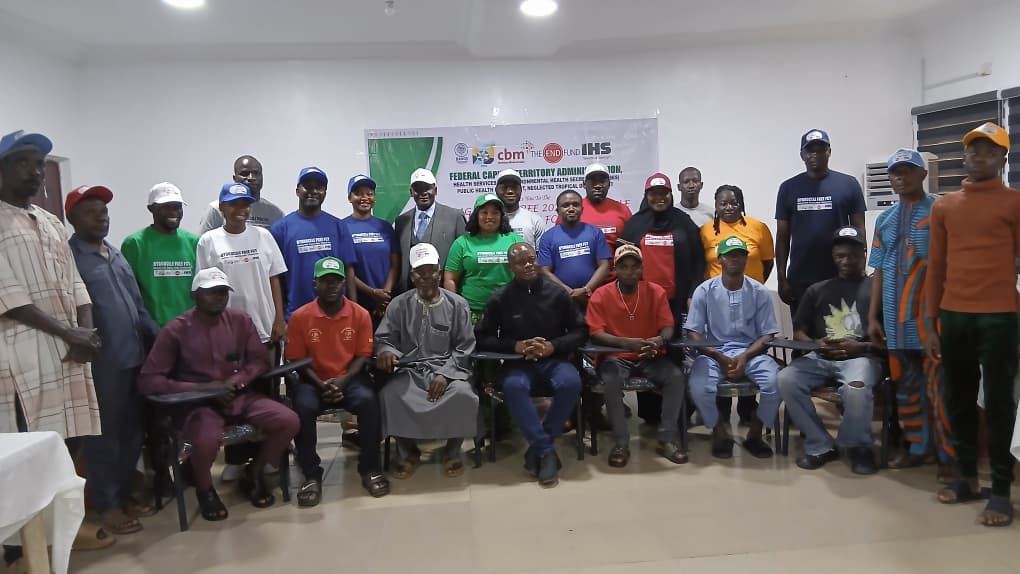
…Over 210 patients benefit from hydrocele surgeries as stakeholders renew commitment to a Hydrocele-Free FCT
By: Prudence Okonna
The Federal Capital Territory Administration (FCTA), in partnership with IHS Towers, The END Fund, CBM and HANDS, has renewed its commitment to eliminating neglected tropical diseases (NTDs) in the FCT, with more than 210 hydrocele surgeries conducted over the past three years through the partnership.
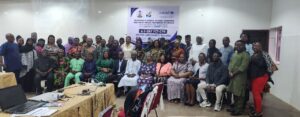
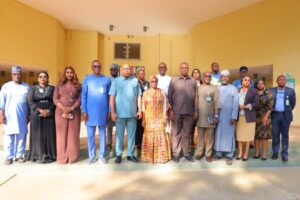
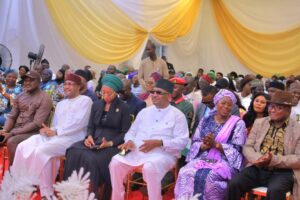
The commitment was reaffirmed during an IHS Towers monitoring visit and flag-off of hydrocele surgeries at Kubwa General Hospital, Abuja, on Friday, August 14, 2026, organised under the theme, “Hydrocele-Free FCT: Restoring Health, Restoring Dignity, Restoring Hope.”
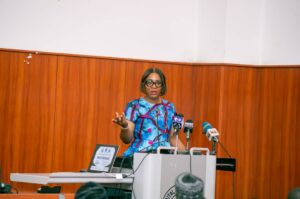
Director of Public Health Department (PHD), Health Services and Environment Secretariat (HSES), FCT, Dr Theresa Nwachukwu, said the intervention was more than a monitoring exercise, describing it as evidence of what could be achieved when government, development partners, the private sector, health professionals and communities worked together towards a shared public health goal.
The Director, who was represented by the Head of Disease Control Division, PHD, Dr Ngozi Ebisike, noted that although hydrocele was medically treatable, its effects could extend beyond the physical condition, affecting mobility, productivity, family life, self-esteem and social participation.
She said the provision of safe and quality surgical services was therefore not only about treating a medical condition but also about restoring confidence, dignity and the ability of affected persons to participate fully in their families and communities.
Nwachukwu appreciated IHS Towers, The END Fund, CBM and HANDS for their commitment to improving the lives of people affected by hydrocele, while commending the management and clinical team of Kubwa General Hospital for providing the expertise and compassionate care required for the intervention. She urged stakeholders to pay attention to the quality of care, patient safety, infection prevention and control, patient experience, follow-up and documentation, stressing the need to strengthen community awareness, identification and referral of cases and integrate hydrocele services into routine healthcare.
The Chief Medical Director, Kubwa General Hospital, Dr Emmanuel Musa, described the hospital’s partnership with the organisations as an important step towards improving access to healthcare and restoring dignity to members of the community affected by hydrocele.
Musa said Kubwa General Hospital had become an important platform for the intervention, noting that the facility had a dependable medical team capable of sustaining the services. He commended CBM, IHS Towers and other partners for their commitment to ensuring that patients had access to care that was available, accessible and affordable.
According to him, the partnership addresses three major barriers to healthcare: accessibility, availability and affordability. He recalled that discussions on the programme began about three years ago, adding that the impact should not be measured only by the number of beneficiaries but by the individual lives transformed. “Even if it is one person that somebody can touch positively, it is a big number,” he said, expressing optimism that continued collaboration would soon push hydrocele out of the FCT.
The Assistant Director, Regulatory Affairs, IHS Towers, Damian Udeh, said IHS Towers explained that the company’s partnership with The END Fund under the WASH-related Neglected Tropical Diseases programme was supporting interventions aimed at reducing the burden of diseases such as lymphatic filariasis while providing essential care to affected individuals.
Udeh, who was represented by a member of the IHS team, Jummai Adeika, while commending every partner, said hydrocele had significant physical, social and economic consequences, making access to safe and quality surgery important in restoring dignity, improving quality of life and enabling beneficiaries to return to their families, communities and livelihoods.
He added that the monitoring visit would provide an opportunity to listen to beneficiaries and healthcare providers, identify areas for improvement and ensure that the intervention continued to produce meaningful and sustainable outcomes.
Also speaking, NTDs Specialist at Christoffel-Blindenmission (CBM), Joseph Kumbur, expressed appreciation to the FCT Administration, IHS, medical team, beneficiaries and NTD programme team for their contributions to the initiative.
Kumbur described HANDS as a strategic implementing partner through which CBM worked with government and other stakeholders, while also recognising The END Fund as a strategic partner and donor that had supported NTD interventions since 2019.
He explained that FCT remained endemic for several NTDs, including lymphatic filariasis, onchocerciasis, schistosomiasis and soil-transmitted helminthiasis, but said years of interventions had significantly reduced the burden of some of the diseases.
He said the FCT was now approaching the final stages of eliminating lymphatic filariasis, with transmission interruption, further surveillance and assessment ongoing.
According to him, hydrocele surgery and lymphedema management were important components of the elimination strategy because people already affected by the disease must not be left behind. He commended Kubwa General Hospital for establishing hydrocele surgery as a routine service rather than a one-off intervention, saying this would help ensure continued access to care even beyond donor-funded programmes.
Presenting an overview of the support, the FCT NTDs Coordinator, Public Health Department, Lami Tauhid Ndayako, said IHS Towers, through The END Fund, had invested approximately ₦114 million over the last three years to advance the elimination of NTDs in the FCT.
Ndayako said the support had strengthened preventive and morbidity management interventions for lymphatic filariasis and onchocerciasis. She noted that the partnership had supported mass administration of medicines for onchocerciasis in two Area Councils, reaching communities with more than 400,000 doses of ivermectin, while more than 600 community case finders had been trained to identify and refer persons living with hydrocele and lymphoedema for surgery, treatment and management.
While appreciating IHS for their support, she added that the programme had also strengthened routine data collection and reporting for morbidity management and disability prevention services and successfully facilitated more than 210 hydrocele surgeries over the past three years.
Ndayako stressed that the investment had expanded access to essential healthcare and accelerated progress towards the elimination of NTDs in the Territory.
A hydrocele is a fluid-filled sac inside the scrotum (the pouch of skin that holds the testicles) that causes swelling and a feeling of heaviness. In children, it is caused by abdominal fluid that can flow into the scrotum, while in adults it is caused by an infection.
The monitoring visit also provided an opportunity for two beneficiaries of the free hydrocele surgery programme, Mr Daniel Ebiloma and Mr Mathew Sunday, to share their personal experiences live, highlighting the impact of the intervention and how access to surgical care had changed their lives. Their testimonies reinforced the central message of the programme: that eliminating hydrocele is not only about disease control, but about restoring health, dignity and hope to affected persons.