FORTY YEARS LATER, STILL FAMILY: INSIDE FGCM CLASS OF ’86’S REUNION OF PURPOSE
By: Prudence Okonna
Before the laughter echoed through the halls of the Abuja venue, before old classmates embraced after years apart, and before memories of teenage adventures resurfaced over dinner conversations, members of the Federal Government College Maiduguri (FGCM) class of 1986 had already made their loudest statement, not with words, but with an act of generosity.
On June 10, 2026, exactly four decades after leaving the classrooms and hostels of Federal Government College Maiduguri, the alumni donated 100 double-bunk beds and 200 mattresses to their alma mater, a gift designed to improve the living conditions of students in the school’s boarding houses.
It was a practical intervention born out of empathy.
“We discovered that while people can eat almost anywhere, they cannot sleep just anywhere. If students sleep well, it affects their health, concentration, and academic performance. That was why we chose the bunk beds,” explained Tsukunda Wulfu Yakubu, one of the leaders of the reunion.
The donation, valued at several million naira, became the defining legacy project of the class’s 40th anniversary celebrations. The gesture did not go unnoticed.
In a letter quietly tucked into the reunion programme, the vice principal (administration) of Federal Government College, Maiduguri, Mallam Mustapha Mohammed, conveyed the appreciation of the school management.
“On behalf of the management, staff and students, I would like to sincerely convey our profound gratitude and appreciation to the class of ’86 for your wonderful contribution to the students’ corporate life and pastoral care at the college.
This quintessential class donated one hundred (100) double bunks to the college to mark the ’86 set’s 40th anniversary.
Definitely, this gesture will improve the quality of life of students in the boarding house.”
For the old students, however, the donation was only one chapter in a much larger story.
A REUNION DECADES IN THE MAKING
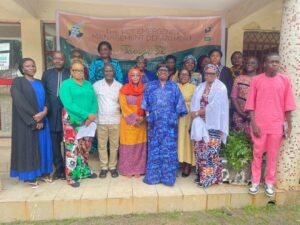
From Thursday, June 25 to Sunday, June 28, nearly thirty members of the class of 1986 travelled from across Nigeria and different parts of the world,including Canada, the United States and Europe, to Abuja for what they described as a retreat rather than merely a reunion.
Over four days, they shared meals, enjoyed picnics, reflected on life’s journey, worshipped together, laughed over old memories, discussed investments, planned future interventions for their alma mater and reaffirmed friendships that had endured the test of time.
To outsiders, it may have looked like another alumni gathering. To those present, it felt more like a family reunion. Many had not seen one another in years. Some remembered classmates who were no longer alive. Others reflected on careers that had taken them across continents—from medicine and academia to public service and business. Yet when they gathered, titles faded. Everyone simply became classmates again.
THE CLASS OF 1986 PROUDLY CALLS THEMSELVES“THE QUINTESSENTIAL SET”
According to Yakubu, the name carries historical significance. The set was the last graduating class under Nigeria’s old secondary education structure before the transition to the new 6-3-3-4 educational system.
“There were no graduates in 1987; we graduated in June 1986, and the next graduating class was in 1988. That makes us unique. That’s why we call ourselves the quintessential class,” she explained.
But beyond educational history, Yakubu believes the uniqueness lies in the bond members have sustained over forty years.
“we support each other through joy and sadness. We celebrate together, mourn together and lift one another. Like a broom, when the sticks are tied together, they can sweep effectively.”
RAISING ₦10 MILLION, ONE CONTRIBUTION AT A TIME
The donation project did not happen overnight. Planning began months earlier during a meeting held alongside the association’s annual conference in October.
Members first approached the school management to identify its most pressing needs.
Among the options presented were infrastructure projects, parking facilities and hostel improvements.
After careful deliberation, they settled on providing bunk beds. The fundraising target was ₦10 million. Contributions flowed from members according to individual capacity. As donations increased, a procurement committee searched for the most affordable and durable options in Maiduguri to avoid transportation costs.
Eventually, the target was achieved. The result was 100 double bunk beds—providing sleeping spaces for 200 students.
“when we eventually saw the hostel, we realised how much difference the donation would make.” yakubu recalled,
A FAMILY THAT NEVER STOPPED GROWING
For Dr. Adewale Akinlosutu, who travelled from Canada for the reunion, the strength of the class lies in relationships nurtured over four decades.
“We’re like a family; we celebrate one another, discuss issues that affect us, help one another and look ahead to the future together,” he said.
The reunion, he explained, was not only about reminiscing. It was also about giving back.
“we hope to continue supporting our school and eventually extend our impact to the wider community and the country.”
Reflecting on forty years, akinlosutu described the milestone as both joyful and sobering.
“we’ve lost some people along the way. So being able to gather like this, laugh together and thank god is very special.”
LOOKING BEYOND NOSTALGIA
For Dr. Babagana Adam, the reunion represented more than memories. It was about preparing for the future.
Members discussed creating investment opportunities, supporting colleagues facing health or financial challenges and establishing sustainable welfare initiatives.
“this is about supporting ourselves. We’re discussing investments, empowerment, education and helping those among us who may need assistance.” he explained.
Having recently retired as a permanent secretary in the federal capital territory administration, adam described the reunion as evidence that the class continues to thrive despite the passage of time.
“some of us are no longer alive. So, we thank god that we’re still here, healthy and able to celebrate together.”
BLACK ATTIRE, DEEPER MEANING
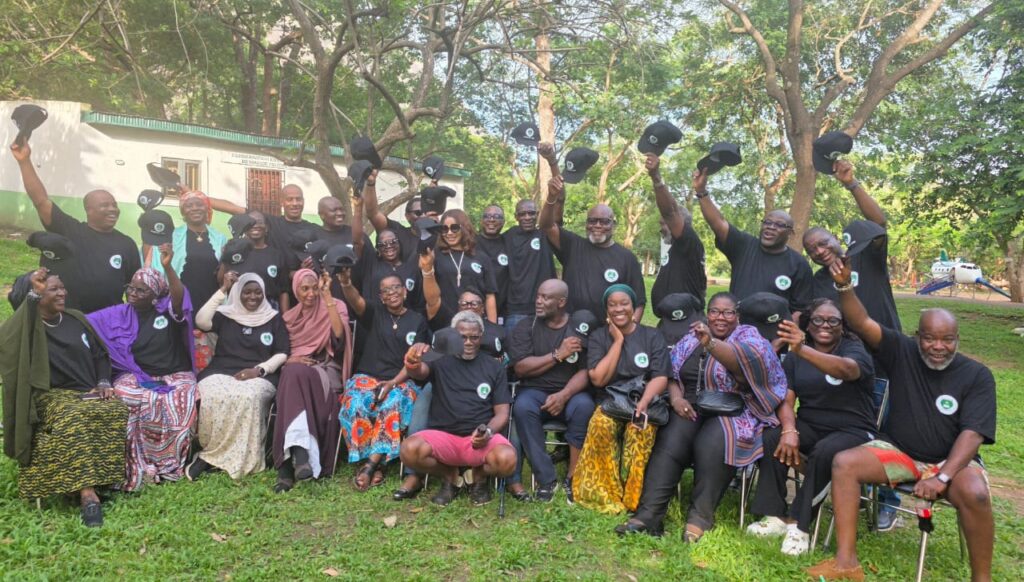
One striking feature of the reunion was the members’ decision to wear black during the picnic hangout on Friday, June 26.
Contrary to what many assumed, it was not simply a dress code. Yakubu explained that the colour symbolised solidarity with families struggling across Nigeria.
“Even though we’re celebrating, we recognise the pains many people are experiencing. We’re praying for the children and families affected by insecurity.”
The choice reflected a gathering that balanced celebration with compassion.
A CHALLENGE TO TODAY’S GENERATION
During the anniversary dinner on Saturday, June 27, a keynote speaker and fellow alumnus, Mr Nura Kakira of the class of 1979, congratulated the celebrants before turning attention to broader societal concerns.
He lamented the declining reading culture among young people, warning that excessive dependence on social media and artificial intelligence could weaken critical thinking.
“students no longer read as they used to. They simply push assignments to ai and stop thinking.” he observed.
He also raised concern over increasing substance abuse among nigerian youths, describing it as one of the nation’s growing challenges.
“remember where you came from. Thank god for how far he has brought you and pray that all of us gathered here today will celebrate your golden jubilee together.” he encouraged
BUILDING A STRONGER ALUMNI COMMUNITY
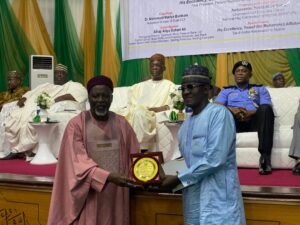
Also, the president of the Federal Government College Maiduguri Old Students Association (FEGOCOMOSA), Christopher Abu, praised the class of 1986 for demonstrating what alumni engagement should look like.
“Your donation is not just furniture; it represents comfort, dignity and care for the students coming after us,” he said.
He also highlighted achievements recorded by the national association, including expanded healthcare support for members, solar electrification projects at the college, medical outreaches, financial reforms, job placement initiatives and stronger chapter development across Nigeria.
He appealed for greater unity, transparency and sustained welfare support for less privileged members.
MORE THAN A REUNION
As conversations gradually faded and participants prepared to return to their various countries and cities, one thing remained unmistakably clear.
The 40th anniversary of the federal government college maiduguri class of 1986 was never simply about celebrating the past.
It was about renewing friendships. It was about remembering those no longer present. It was about investing in the next generation. Most importantly, it was about proving that while four decades may separate people from their school days, they need not separate them from one another.
In the end, the class of 1986 did more than commemorate forty years after graduation.
They demonstrated that the strongest legacy of education is not merely the certificates earned, but the lifelong bonds forged—and the lives those bonds continue to transform.