PEOPLE, POLITICS AND POWER PLAY IN NIGERIA: THE AGITATION FOR EQUITY AND FAIRNESS
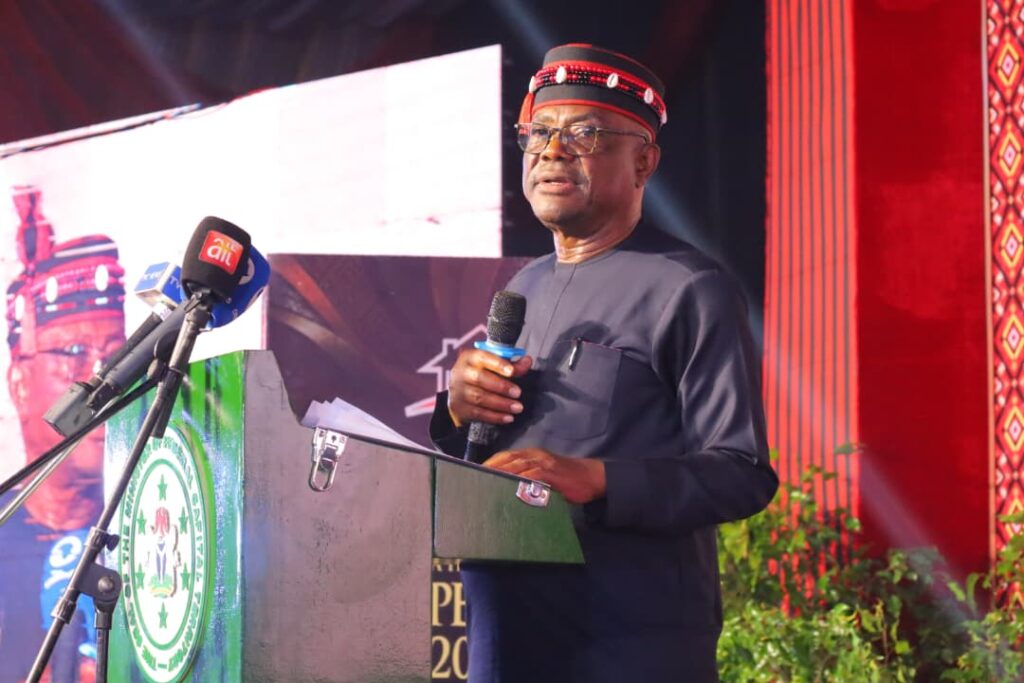
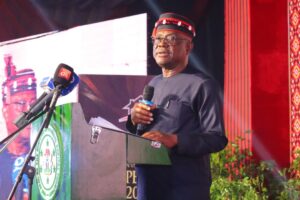
KEYNOTE ADDRESS DELIVERED BY HIS EXCELLENCY, NYESOM EZENWO WIKE, CON, HONOURABLE MINISTER OF THE FEDERAL CAPITAL TERRITORY, AT THE FIRST IDOMA HALL OF FAME INDUCTION CEREMONY, IN COLLABORATION WITH OCHETOHA K’IDOMA, AS PART OF THE IDOMA CENTENARY PLUS CELEBRATION ON THURSDAY, 15 OCTOBER, 2026.
Distinguished Chairman of this occasion,
The Executive Board and Central Planning Committee of the Idoma Hall of Fame,
The Och’Idoma and other distinguished traditional rulers,
Honourable Ministers and Members of the National Assembly,
Your Excellencies,
Members of the diplomatic community,
Distinguished academics and professionals,
Captains of industry,
Leaders of faith-based organisations and civil society,
Members of the media,
Distinguished inductees,
Ladies and gentlemen.
I am deeply honoured to share my thoughts with you on this historic occasion of the inauguration of the Idoma Hall of Fame and the induction to same, of distinguished Idoma sons and daughters whose contributions have enriched the life of our nation. I commend the organisers for creating an institution dedicated not merely to celebrating accomplished individuals, but to documenting history, preserving heritage and inspiring generations yet unborn. That purpose acquires even greater significance as we celebrate the Idoma Centenary Plus. A people who preserve their history, preserve more than names and dates. They preserve the experiences through which a community understands itself, the struggles through which it has passed, the achievements of those who came before, and the values it wishes to transmit to those who will come after.
Let me express my profound appreciation for the generous words contained in the invitation extended to me. Your description of my contributions to governance, democratic development, public administration and nation-building, and your recognition of my commitment to public service, infrastructural renewal and transformative governance, are deeply humbling. At a time when public leadership is often viewed through the distorting lenses of partisan interest, political rivalry and competing narratives, it is particularly reassuring to see an organisation prepared to assess public service on the basis of discernible contributions and impact. Your decision to consider me worthy of delivering this keynote, and the confidence expressed in the reasons for the invitation are deeply appreciated and constitute an encouragement to continue serving Nigerian people with diligence, courage and an abiding sense of responsibility. I thank you most sincerely for this honour.
I have been asked to speak on “People, Politics and Power Play in Nigeria: The Agitation for Equity and Fairness.” The subject could hardly be more appropriate. Nigeria is a nation of extraordinary diversity. We are a federation of peoples, languages, cultures, faiths, histories and memories. Our diversity is one of our greatest assets, but it has also made the question of access to power, one of the most sensitive questions in our national life. In Nigeria, politics is rarely only about political office. It is also about representation, recognition, security, opportunity, resources and the reassurance that one belongs to the natural power complex. The agitation for equity and fairness is therefore not a marginal issue. It lies close to the heart of the Nigerian project.
But we must ask a difficult question: What exactly do Nigerians mean when they demand equity and fairness? Do we mean that every part of Nigeria must receive exactly the same thing, regardless of circumstances? Do we mean that every ethnic group must produce a president, governor, minister or other office-holders at some predetermined interval? Do we mean that public appointments should be distributed according to identity rather than competence? Or do we mean something deeper – that every Nigerian should have a fair opportunity to participate in national life, to compete for office, to benefit from public institutions and to live with the confidence that the Nigerian state does not belong more to one group than to another? I believe the last interpretation takes us closer to the heart of the matter.
PEOPLE, POWER AND THE NIGERIAN QUESTION
The Constitution of the Federal Republic of Nigeria, 1999 (as amended) places the people at the centre of political authority. It affirms that sovereignty belongs to the people, from whom government derives its powers and authority. It further declares that Nigeria is a state based on the principles of democracy and social justice, and that the security and welfare of the people remain the primary purpose of government (Federal Republic of Nigeria 1999, sec. 14). These provisions are far more than constitutional ornamentation. They establish a fundamental principle of the Nigerian political order; which is that power belongs ultimately to the people and is entrusted to those who exercise it on their behalf. Government exists for the people; it does not own them. Political office is therefore not personal property. It is a public trust.
This distinction goes to the heart of the Nigerian question. One of the enduring difficulties of our political life is the tendency to convert public power into private possession. When political office becomes a means of personal accumulation, public resources become instruments of private enrichment. When power becomes an avenue for sectional domination, those outside the circle of privilege begin to experience the state as an alien institution. When access to public office depends more on patronage than merit, competence is displaced by connection. And when citizens come to believe that government belongs only to those who control it, the moral foundations of national loyalty begin to weaken.
It is against this backdrop that the language of marginalisation has acquired such extraordinary force in Nigeria. A community that believes it has been persistently excluded from political authority, public appointments, infrastructure, economic opportunity or national recognition will rarely interpret political decisions as neutral. Over time, exclusion becomes memory; memory becomes grievance; grievance becomes political mobilisation. The danger is that every appointment begins to be read as a victory for one group and a defeat for another, while distribution of resources become a referendum on belonging. The challenge, therefore, is greater than ensuring that different groups occasionally occupy positions of power. It is to construct a political order in which Nigerians genuinely believe that the national space belongs to all and that the rules of access are reasonably fair.
Nigeria’s constitutional response to this challenge is the federal character principle. The Constitution does not leave representation entirely to political discretion; it makes it a constitutional obligation. Section 14(3) requires the composition of the Federal Government and its agencies, and the conduct of their affairs, to reflect the federal character of Nigeria, promote national unity and command national loyalty, while preventing the predominance of persons from a few states or ethnic or other sectional groups. Section 14(4) extends the principle to state and local governments, requiring them to recognise the diversity of their people and promote a sense of belonging and loyalty among citizens (Federal Republic of Nigeria 1999, sec. 14).
At its core, therefore, federal character rests on a simple but profound proposition: no section of Nigeria should be made to feel that the Nigerian state belongs to others but not to itself. The principle was intended to promote national loyalty in a multi-ethnic society by preventing the domination of public institutions and high offices by persons from a few states or sectional groups (Afigbo 2005). It was, in essence, an attempt to convert Nigeria’s diversity from a source of permanent apprehension into a basis for shared belonging.
Be that as it may, the principle of representation raises a question that Nigeria cannot afford to evade: representation for what purpose? If diversity in appointments merely changes the identities of those who gain access to public resources without changing the manner in which public power is exercised, then representation can become little more than a redistribution of privilege. Equity must therefore do more than alter who sits at the table; it must help determine whether the table itself is fair. This is why Rotimi Suberu describes federal character as Nigeria’s principal mechanism for mitigating horizontal inequalities and managing the dangers of inter-group conflict through greater inclusion in governmental institutions, while also drawing attention to the limitations and contradictions that have accompanied its implementation (Suberu 2022). The lesson is important. Equity cannot mean merely changing the identity of those who benefit from power. It must mean changing the conditions under which power is accessed, exercised and shared. If one group replaces another at the table while the benefits remain fundamentally exclusionary, the occupants have changed, but the injustice has not.
This is where the Nigerian conversation about fairness becomes morally demanding. If we complain about marginalisation only when our own people are excluded, but become silent when others are marginalised after our people gain power, we are not opposing injustice; we are seeking access to its privileges. If we demand fairness when we are disadvantaged but celebrate exclusion when it favours us, then what we call equity is merely self-interest wearing the language of justice. The true test of fairness is therefore not what we demand when we are losing, but what we are prepared to defend when we are winning. It is easy to speak passionately about equity when one’s community is excluded. It is far more difficult to defend the same principle when one’s community enjoys disproportionate access to power, appointments, resources or opportunity. Yet that is precisely when principle becomes meaningful. Justice ceases to be a slogan when we are willing to defend it even when it does not benefit us.
Nigeria, therefore needs a conception of equity that rises above the arithmetic of ethnic and sectional entitlement. The question should not be simply, “Is my person there?” but also, “Is the process fair? Is the institution serving the public interest? Is merit respected? Is every Nigerian given a reasonable opportunity to participate? And would I still consider this arrangement just if the beneficiaries belonged to another group?” Those are harder questions, but they are the questions upon which a durable federation must ultimately rest. The Nigerian question is not merely a question of who possesses power. It is a question of what power is for, how it is acquired, how it is exercised, who has access to it, and whether those who exercise it can be trusted to regard themselves as trustees rather than owners of the state. Until that distinction becomes deeply embedded in our political culture, the agitation for equity and fairness will continue to return, generation after generation, because the problem will have been treated as a contest over who occupies power rather than as a question of how power itself should serve the people.
The enduring task is to move Nigeria from the politics of “whose turn?” to the politics of “what is right?”; from representation as entitlement to representation as responsibility; and from the struggle to capture the state to the shared determination to make the state work for all.
POLITICS, POWER PLAY AND THE SEARCH FOR BALANCE
Politics, at its core, is about power:, how it is acquired, who obtains it, how it is exercised, how it is shared, whose interests it serves and what limits are placed upon it. There is nothing inherently wrong with political competition. Indeed, competition is indispensable to democracy because it gives citizens alternatives, creates incentives for accountability and provides peaceful means through which political authority can change hands. The danger begins when competition becomes a zero-sum struggle in which the advancement of one community is interpreted as the permanent defeat of another, and political victory becomes synonymous with sectional domination.
Nigeria’s history demonstrates how deeply this anxiety has shaped the organisation of political power. As a profoundly diverse federation, Nigeria has repeatedly redesigned its political architecture and experimented with mechanisms intended to distribute authority, widen participation and reassure competing groups that they possess a stake in the Nigerian state. Federalism, the creation of regions and later states, federal character, revenue-allocation arrangements, quota systems, zoning and political rotation have all, in different ways, emerged as responses to the challenge of governing diversity. Yet experience has shown that institutional arrangements alone cannot settle the question of belonging. As Dele Babalola and Hakeem Onapajo observe, Nigeria operates a hybrid system of power-sharing in which formal institutional mechanisms coexist with informal political practices, including elite-negotiated arrangements such as zoning and rotational presidency (Babalola and Onapajo 2024).
That observation points to a deeper problem. Nigeria does not suffer simply from a shortage of formulas for accommodating diversity; it also struggles with the political culture within which those formulas operate. Rules can distribute offices, but they cannot by themselves create fairness. Institutions can prescribe inclusion, but they cannot guarantee good faith. Political bargains can produce temporary accommodation, but they cannot substitute indefinitely for a shared commitment to citizenship and the common good. The enduring challenge is therefore not merely to devise better ways of sharing power, but to create a political culture in which power is understood as a trust to be exercised for the benefit of the whole country.
The mechanisms Nigeria has developed have undoubtedly provided avenues for accommodation and, at various moments, helped to moderate fears of exclusion. But they also raise difficult questions that should not be silenced by political convenience. When does inclusion become entitlement? When does accommodation become bargaining among elites? When does zoning promote stability, and when might it constrain open political competition? When does federal character protect diversity, and when can its implementation create tensions with merit and competence? These questions deserve neither simplistic answers nor partisan slogans. They require Nigeria to hold two principles together: representation and competence.
A Nigerian should not be excluded from public office because of where he or she comes from; neither should competence become irrelevant once a candidate’s identity satisfies a representational expectation. The goal should not be to choose between diversity and merit, as though the two were inherently incompatible. The goal should be to build a system in which diversity enlarges the pool of talent available to the nation rather than narrowing it. Put differently, our diversity should help determine who must be given a fair opportunity to participate while not sacrificing competence which should help determine who can effectively discharge the responsibility entrusted to them. Representation should open the door, not remove the obligation to perform once one enters. This balance will not always be easy to achieve. But nation-building is rarely an exercise in easy choices. A mature political system must be capable of recognising the legitimate claims of identity without allowing identity to become a permanent substitute for proper performance. It must be able to accommodate diversity without institutionalising mediocrity, and pursue fairness without sacrificing the competence upon which effective government ultimately depends.
There is another dimension of Nigeria’s power struggle that is often obscured by the language of representation. Political elites may negotiate offices and influence in the name of regions, ethnic groups or religious constituencies, while ordinary citizens remain preoccupied with questions that are much more immediate: Where is the job? Does the school work? Can I afford treatment when I fall ill? Is the road passable? Is electricity reliable? Can my business survive? Will my children have a future better than mine? This gap between the politics of elite accommodation and the lived reality of citizens is one of the most important tensions in the Nigerian political experience. A young Nigerian without employment does not necessarily experience political inclusion because someone from his ethnic group has become a minister. A community without a functioning health centre does not experience development simply because one of its sons occupies a prominent office. A child learning in an overcrowded and poorly equipped classroom does not experience fairness because politicians have delivered eloquent speeches about equitable representation.
Representation matters, but representation cannot be the destination. It must be a pathway to public value, and consummate service delivery in the polity.
The real measure of political inclusion is therefore not simply who occupies office, but what the exercise of that office produces for the people. Political power that reproduces itself through appointments while failing to expand opportunity risks becoming an end in itself. A political system may become more geographically representative while its citizens remain unemployed, insecure, poorly educated and economically excluded. In such circumstances, the symbolism of inclusion may coexist with the tragedy of deprivation.
The scale of Nigeria’s inequality makes this contradiction impossible to ignore. The World Bank’s Nigeria Poverty and Equity Brief of October 2024 highlights pronounced spatial disparities in poverty and links persistent deprivation to weak job creation, limited economic diversification and structural constraints to economic transformation (World Bank 2024). The implication is profound: political inclusion cannot be sustained indefinitely without economic inclusion. A citizen who is told that he belongs to the Nigerian political community but remains shut out of meaningful economic opportunity may continue to experience the state as distant and indifferent. Equity must therefore be understood in broader terms. It is not merely about who receives an appointment; it is also about who has access to education, employment, healthcare, infrastructure, credit, security, justice and the opportunity to build a dignified life. It is about whether the child born in a remote community has a meaningful chance to compete with the child born in a privileged urban environment. It is about whether talent can rise without patronage, whether enterprise can flourish without political connection and whether citizenship carries approximately the same promise regardless of one’s birthplace or identity.
This is where the politics of power must ultimately confront the purpose of power. What is the value of winning political power if the people remain unable to translate citizenship into opportunity? What is the value of securing “our turn” if the system continues to fail those whose turn it is? And what does it mean to demand fairness for one’s group while accepting injustice when it benefits one’s group? These questions take us beyond the arithmetic of political representation to the ethics of nation-building. Nigeria cannot permanently resolve its anxieties by ensuring that every group gets a turn at occupying positions of authority. The deeper task is to create institutions in which no Nigerian needs to capture political power merely to feel secure, represented or entitled to the benefits of citizenship. That is the balance Nigeria must ultimately seek: not a balance in which every group merely gets a share of power, but one in which power itself is restrained, institutions are trusted, competence is valued, opportunity is widened and every citizen can reasonably believe that the Nigerian state is his or hers as much as anyone else’s. The mature politics of a diverse nation should therefore move beyond the question, “Who is occupying the seat?” to the more consequential question, “What is being done with the seat?” Beyond “Where does the office-holder come from?” to “What does the office-holder do for those over whom he exercises authority?” And beyond “Is our person there?” to the harder civic question: “Is the public interest being served?”
That is where the search for balance must ultimately lead. Nigeria does not need a polity in which diversity is denied, nor one in which identity becomes the final measure of justice. It needs a polity in which every community can see itself in the Nigerian project, while every office-holder understands that representation is not a licence to underperform and political victory is not ownership of the state. The purpose of power is not to give one group its turn at the table. It is to ensure that the table serves the people.
EQUITY, FAIRNESS AND THE NIGERIAN FUTURE
Ladies and gentlemen, Nigeria must therefore move from the politics of grievance to the politics of responsibility. There is nothing illegitimate about agitation. Indeed, many of the rights Nigerians enjoy today were secured because individuals and communities refused to accept injustice as normal. Agitation has often been an engine of political change. But agitation must have a destination. If every generation inherits the same grievances without building institutions capable of resolving them, agitation becomes cyclical: one group replaces another as the aggrieved, another becomes the beneficiary, and yet another waits for its turn. That is not nation-building. It is the endless redistribution of grievance.
The objective must be more ambitious: to build institutions strong enough to make justice less dependent on who happens to occupy political office (Onor 2021). This requires us to distinguish equality, equity and justice. Equality demands that citizens be treated according to the same fundamental standards. Equity recognises that historical circumstances and structural differences may sometimes require differentiated measures to secure genuinely fair opportunities. Justice asks the deepest question of all: whether the arrangements of society are fair in the first place. Nigeria needs all three – equal citizenship, equitable inclusion and justice in the distribution of opportunity, public goods and political voice.
This is why the struggle for fairness cannot be reduced to the contest for the presidency, governorships or ministerial appointments. It extends to education, employment, infrastructure, healthcare, access to credit, security, political participation and the protection of rights. A nation is not fair simply because every region has produced a minister. It is fair when no child is made to pay for the accident of his birthplace. It is fair when competence can emerge from anywhere and be given a genuine opportunity to serve. It is fair when political power does not become the permanent inheritance of particular families, regions, religions or networks. It is fair when a young woman from a remote community can aspire to the highest office without first having to overcome invisible barriers created by identity. It is fair when the child of a poor farmer and the child of a wealthy politician can both believe that their futures will be determined primarily by ability, effort and opportunity rather than by the connections into which they were born. That is the Nigeria we should be building.
Furthermore, fairness is not merely a question of who receives benefits; it is equally a question of who maximizes opportunities. Government cannot employ everybody, solve every personal problem or make every citizen wealthy. What government can and must do is create environments and institutions in which effort has meaning, enterprise has opportunity, justice has credibility and citizenship has value. This is why infrastructure matters. This is why education matters. This is why healthcare matters. This is why security matters. This is why an efficient public service matters. And this is why economic reform must ultimately be judged not only by its technical indicators but by its effect on the productive capacity, opportunities and welfare of ordinary citizens.
Generally, we must exercise discipline in the language of marginalisation. Not every failure is evidence of marginalisation. Not every unsuccessful political contest is evidence of exclusion. Not every appointment of someone from another part of the country is an injustice. But neither should every genuine complaint of marginalisation be dismissed as ethnic agitation. A mature nation must learn to examine claims rather than merely react to them. We must ask: What happened? What is the evidence? What is the historical context? What principle is at stake? Who has been affected? What remedy is appropriate? This is the discipline of democratic citizenship. It is also the discipline of responsible leadership. Leaders, in particular, must resist the temptation to manufacture or manipulate grievances for political advantage. The politics of identity can mobilise people quickly, but the instrument that mobilises supporters today can become the weapon that divides the country tomorrow. Nigeria cannot build a durable future if every political entrepreneur discovers that the easiest route to power is to persuade one group that another group is its enemy or oppressor.
We must therefore move from the politics of “our turn” to the politics of “our responsibility.”
Our turn asks: When will our people get power?
Our responsibility asks: What will we do with power when it comes?
Our turn asks: How much of the national cake belongs to us?
Our responsibility asks: How do we make the cake larger, and how do we distribute it fairly?
Our turn asks: Who occupies the office?
Our responsibility asks: What does the office achieve for the people?
And perhaps the most important question is this: If our group finally obtains the power for which it has agitated, will we use that power to correct injustice or merely change who benefits from it? This is the real test of equity.
The ultimate measure of political inclusion, therefore, is not simply who gets power, but what power does with the lives of the people. If political power produces better schools, functioning hospitals, secure communities, productive jobs, reliable infrastructure, equal protection under the law and wider opportunities for citizens, then representation has acquired substantive meaning. If it merely changes the identities of those who occupy privileged positions, then the language of equity risks becoming a sophisticated justification for the redistribution of privilege.
The Nigeria we seek must be larger than the sum of our competing identities. We must build a country in which no Nigerian needs to ask first, “Who is our own?” before asking, “What is right?” That is the transition Nigeria needs: from entitlement to responsibility, from access to achievement, from representation to results, and from the politics of “our turn” to the politics of a common future.
FROM AGITATION TO NATIONAL RECONCILIATION
The agitation for equity and fairness will not disappear. As long as citizens perceive exclusion, inequality or injustice, they will demand answers. That is not a failure of democracy; it is part of democratic life. The real challenge is to transform agitation from a recurring expression of grievance into a force for institution-building and national renewal.
We must build political parties that practise genuine internal democracy; strengthen electoral institutions and protect the integrity of the ballot; make public appointments more transparent; enforce constitutional principles of inclusion; expand economic opportunity; improve the quality of education; and ensure that development reaches rural communities as well as metropolitan centres. We must create pathways through which young Nigerians can participate in political and economic life without first becoming clients of powerful individuals. Above all, we must cultivate a political culture in which disagreement does not automatically become hostility.
The Independent National Electoral Commission has drawn attention to the continuing decline in voter participation: presidential-election turnout fell from 53.7 per cent in 2011 to 43.6 per cent in 2015, 34.7 per cent in 2019 and 26.7 per cent in 2023 (Independent National Electoral Commission 2026). These figures should concern every democrat. Democracy cannot flourish when citizens are treated merely as voters to be mobilised when elections approach. Citizens must participate because government belongs to them. Political parties must therefore see citizens as partners in governance, not merely as instruments for winning elections. And citizens, in turn, must recognise that democracy demands more than receiving benefits: it requires scrutiny, participation, contribution and accountability.
We must also be clear that fairness is not achieved by sacrificing merit. A nation does not become just by appointing incompetent people merely because they come from an underrepresented group; neither does it become meritocratic by pretending that historical inequalities do not exist. The task is more demanding: to build institutions capable of achieving inclusion without sacrificing excellence, and excellence without reproducing exclusion.
Nigeria is large enough, diverse enough and talented enough to achieve this. But political will must be matched by institutional discipline. We must stop designing beautiful policies only to destroy them through poor implementation. We must stop creating institutions whose independence evaporates when powerful interests are involved. And we must stop treating laws as instruments to be enforced against opponents while being negotiated away for allies.
Fairness begins when rules become more important than relationships. It begins when the child of the powerful and the child of the ordinary citizen encounter the same standard of justice. It begins when public office is understood as a trust rather than an opportunity for private accumulation. It begins when leaders recognise that history will judge not simply how long they held power, but what they did with the authority entrusted to them. And it begins when citizens understand that they, too, are custodians of the Republic.
That is the journey from agitation to reconciliation: not the silencing of legitimate grievances, but the building of a Nigeria in which justice makes perpetual grievance less necessary; not the victory of one group over another, but the creation of a political order in which every Nigerian can believe that the Republic belongs to them, and that they, in turn, belong to the Republic.
THE LESSON OF THE IDOMA HALL OF FAME
Distinguished ladies and gentlemen, if the challenge before Nigeria is to move from grievance to inclusion, from exclusion to belonging, and from competition for power to responsibility in the exercise of power, then today’s occasion offers us a particularly powerful lesson. The Idoma Hall of Fame is not merely an institution for remembering accomplished individuals; it is an institution for establishing standards. By choosing whom to honour and what achievements to preserve, it tells a community what it considers worthy of remembrance, what it regards as worthy of emulation, and, ultimately, what it wants the next generation to become. In that sense, the Hall of Fame is not simply a monument to the past; it is a statement about the society we wish to build.
When a society honours its best, it teaches its young people what it values. If we honour wealth without asking how it was acquired, we risk teaching the young to pursue wealth by whatever means necessary. If we glorify political power without examining how it is exercised, we may encourage a generation to seek power as an end in itself. But when we honour service, courage, scholarship, innovation, integrity, enterprise, cultural preservation and sacrifice, we send a very different message: that true achievement is measured not merely by what one acquires, but by what one contributes. That is why this institution matters.
The Idoma story must never be told merely as a story of grievance, exclusion or what was denied. It must also be told as a story of contribution; a story of people who, despite difficulties and limitations, have given generously of their intellect, courage, labour, creativity and leadership to the making of Nigeria. The history of Nigeria is not the history of one people. It is the accumulated history of many peoples who have contributed, in different ways and at different moments, to the making of this country. The Idoma people are part of that story, not merely as claimants to recognition, but as contributors to a national inheritance.
The proper response to exclusion is not withdrawal from the national project. It is not bitterness, isolation or the rejection of the larger Nigerian idea. It is to insist that the Nigerian project live up to its promise – that every citizen and every community should have a fair opportunity to belong, to contribute and to flourish. This message extends far beyond Idoma land. Every community wants recognition. Every community wants security. Every community wants opportunity. Every community wants its children to believe that Nigeria belongs to them.
These aspirations are neither unreasonable nor dangerous. They become dangerous when we begin to believe that one community can rise only if another is pushed down, that one people can flourish only if another is diminished. No nation can build a common future on such a logic. The task of statesmanship is therefore to transform these legitimate aspirations from competing demands into complementary contributions to a common national purpose. The Idoma Hall of Fame can make a remarkable contribution to that purpose. By preserving Idoma heritage and celebrating the lives of those who have distinguished themselves through service, scholarship, creativity, enterprise, leadership and sacrifice, it can demonstrate that the strength of a people is not measured merely by the offices its sons and daughters occupy, but by the value they create and the legacy they leave behind.
CONCLUSION: THE NIGERIA WE CHOOSE
Let me conclude by returning to the key words of this keynote address: people, politics and power. People give politics its meaning. Politics determines how power is acquired and exercised. And power, when properly used, should improve the conditions under which people live. But when that relationship is distorted, politics becomes a struggle for access, power becomes an instrument of accumulation, and citizens become spectators in the affairs of their own country.
We must reject that possibility. Nigeria belongs to all of us. It belongs to the Hausa, Yoruba, Igbo, Ijaw, Kanuri, Tiv, Idoma, Ikwerre, Efik, Ejagham, Ibibio, Edo, Urhobo, Itsekiri, Nupe, Gwari and the hundreds of other peoples who make up this remarkable country. It belongs to Christians, Muslims and adherents of traditional and other faiths. It belongs to those in the North and the South, the East and the West, the cities and the villages; to the wealthy and the poor, the powerful and the powerless, the old and the young, women and men. No Nigerian should need permission to feel at home in Nigeria. That is the deeper meaning of equity. And that is why fairness must never be understood as a favour granted by those who hold power. It is a condition of legitimate government.
Our task, therefore, is not to eliminate political competition, but to civilise it; not to eliminate our differences, but to manage them justly; not to suppress legitimate agitation, but to create credible institutions through which grievances can be heard and resolved; and not to make every Nigerian identical, but to make every Nigerian equal in dignity and citizenship.
We must build a Nigeria in which diversity is not a sentence to exclusion but a source of strength; in which no child inherits the political limitations of his parents; in which public institutions command trust because they are fair; and in which political power is used not to determine who belongs, but to improve the lives of all who belong. This is not an impossible ambition. It is the constitutional promise of our Republic and the moral obligation of our generation.
The Idoma Hall of Fame has chosen this occasion to celebrate Nigerians of Idoma extraction whose achievements and service have distinguished them. Let us therefore use this moment not only to honour the past, but to challenge the present and inspire the future. Let us tell our young people that Nigeria is worth building and that it must be built. Let us tell our political leaders that power is temporary, but its consequences can endure for generations. Let us tell our citizens that participation is a right, but citizenship is also a responsibility. Let us tell every community that its legitimate aspiration for recognition must never become a justification for denying another community the same dignity.
And let us remind ourselves that the Nigeria we desire will not be built by one region, one ethnic group, one religion or one political party. It will be built when we transform our diversity from a source of suspicion into a resource for national development.
The question before us is therefore no longer simply: Who gets power?
The more important question is: What do we do with power when we get it?
And beyond that: Can we build a country in which every Nigerian, regardless of where he comes from, believes that he has a fair stake in the national future?
If we can answer that question in the affirmative – not merely in speeches, but in institutions, policies and everyday conduct – then the agitation for equity and fairness will cease to be a permanent cry of grievance and become part of the foundation of a more just Nigerian federation.
That is the Nigeria we owe to those who came before us.
That is the Nigeria we must build for those who are coming after us.
And that is the Nigeria worthy of the sacrifices, hopes and aspirations of all its peoples.
Thank you, and God bless the Idoma people.
God bless Benue State.
And God bless the Federal Republic of Nigeria.