FCTA DEEPENS PUSH FOR INNOVATION-DRIVEN BASIC EDUCATION
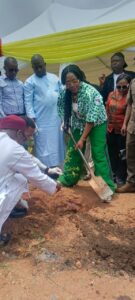
…announce plans to build teachers’ quarters
By: Prudence Okonna
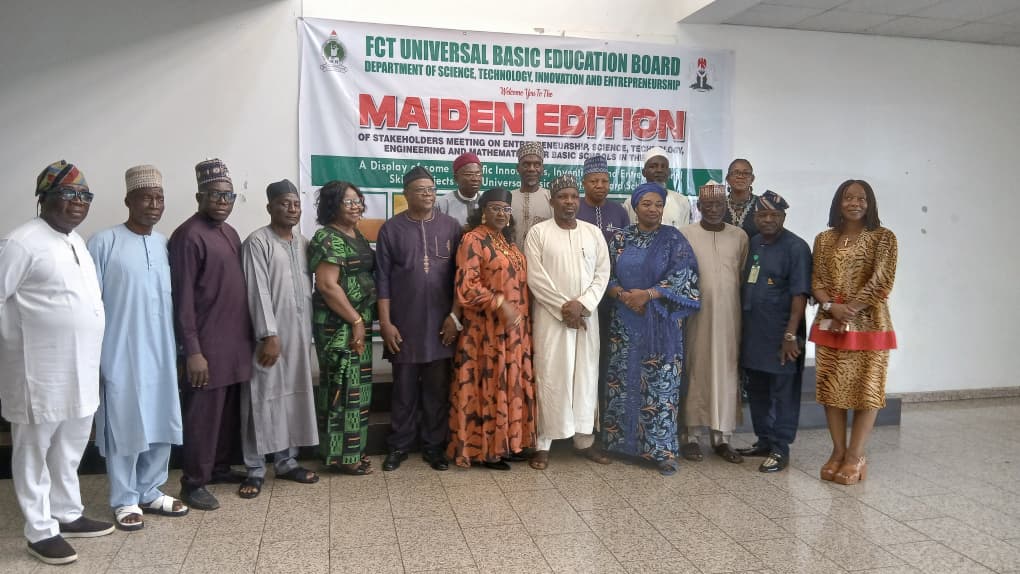
The Federal Capital Territory Administration (FCTA) has taken a significant step toward transforming its basic education system with the convening of the maiden Science, Technology, Innovation and Entrepreneurship (STI&E) Stakeholders Meeting, bringing together policymakers, educators, development partners, and private sector actors to chart a new course for teaching and learning in FCT schools.
Declaring the meeting open on Tuesday, April 14, 2026, the Mandate Secretary for Education, Dr. Danlami Hayyo, described the initiative as timely and critical, given the rapid global shift toward knowledge-based economies driven by science, technology, and innovation.
He stressed that education systems must evolve beyond traditional focus areas to equip learners with practical, future-ready skills.
Dr Hayyo noted that the FCT Administration is committed not only to improving learning outcomes but also to enhancing the welfare of teachers, who remain central to the success of any education reform.
In this regard, the Education Secretary announced plans to construct staff quarters that will accommodate over 1,000 teachers, as well as National Youth Service Corps members posted to schools within the territory.
“This initiative is part of a broader vision to create a conducive environment for teaching and learning, while also addressing long-standing challenges faced by educators,” he said.
The Mandate Secretary further explained that the STI&E programme aligns with the Renewed Hope Agenda of President Bola Ahmed Tinubu, particularly in human capital development, youth empowerment, job creation, and economic diversification.
He emphasised that integrating entrepreneurship into basic education would enable young learners to develop the mindset and skills needed to become job creators rather than job seekers.
Dr Hayyo also highlighted the ongoing infrastructural improvements across FCT schools under the leadership of the Minister of the FCT, Nyesom Wike.
He noted that the massive renovation and rehabilitation of schools have laid a solid foundation for further investments in digital tools, innovation hubs, and modern teaching resources.
According to him, the next phase will focus on equipping schools with facilities that support coding, robotics, vocational training, creative arts, and enterprise development, thereby creating dynamic learning environments that encourage experimentation and discovery.
In her address, the Executive Chairman of the FCT Universal Basic Education Board (UBEB), Florence Wenegieme, emphasised that the STI&E initiative is designed to transform teaching methods in basic education by prioritising practical, hands-on learning. She stressed that science, technology, innovation, and entrepreneurship cannot be effectively taught through theory alone, highlighting the importance of demonstrations, experiments, and skill-based instruction, especially at the nursery, primary, and junior secondary levels.
She explained that the approach focuses on building a strong educational foundation through experiential learning, noting that the programme is already being implemented across the six area councils. Teachers and science coordinators, she said, are actively engaging pupils in practical activities and guiding them to produce usable items. To address the challenge of limited equipment, the Board is encouraging the use of locally available and recycled materials, with support from School-Based Management Committees, parents, and community leaders.
Wenegieme further disclosed plans to establish vocational and technology centres across all area councils to serve as hubs for skills development and innovation. She noted that the initiative aligns with the Renewed Hope Agenda of Bola Ahmed Tinubu by promoting entrepreneurship, self-reliance, and job creation, while reaffirming the Board’s commitment to shifting from rote learning to more interactive, learner-centred approaches.
In her welcome address, the Director of the STI&E Department, FCT-UBEB, Angela Nwachukwu, stated that the meeting was designed to promote collaboration, dialogue, and shared responsibility among stakeholders. She emphasised that advancing science and technology education requires sustained partnerships and collective action, noting that the department is focused on modern teaching approaches such as activity-based and project-based learning, alongside the integration of digital tools. She also highlighted continuous teacher training and capacity development as a key priority.
Similarly, the Director of the FCT Education Resource Centre, Neemat Daud-Abdulrahim, described the integration of science, technology, innovation, and entrepreneurship into education as essential in a rapidly evolving, knowledge-driven world. She noted that the approach is crucial for nurturing critical thinking, problem-solving, and self-reliance among learners, adding that the Centre is already training teachers and embedding these concepts across all levels of education.
She further stressed the importance of stakeholder collaboration in building a strong ecosystem for innovation and encouraged participants to contribute practical, sustainable solutions for national development.
The maiden STI&E Stakeholders Meeting is expected to mark the beginning of sustained reforms aimed at producing a new generation of learners who are academically sound, technologically skilled, innovative in approach, and entrepreneurially driven, positioning the FCT as a model for progressive basic education in Nigeria.