PRESIDENT TINUBU COMMISSIONS COURT OF APPEAL JUDGES’ QUARTERS, FLAGS OFF NEW JUDICIAL HOUSING PROJECTS IN ABUJA

By: Wisdom Acka and Prudence Okonna
President Bola Ahmed Tinubu has reaffirmed his administration’s commitment to strengthening judicial independence, enhancing the welfare of judicial officers, and deepening institutional reforms through sustained investment in judicial infrastructure.
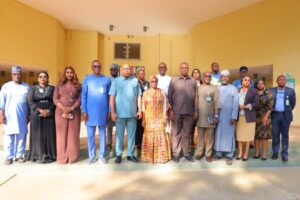
The President made the declaration on Tuesday, 16th June 2026, during the commissioning of a newly completed 10-unit Court of Appeal Judges’ Quarters in Katampe District, Abuja, and the flag-off of additional residential quarters for judges of the National Industrial Court and the Code of Conduct Tribunal.
Represented by the Attorney-General of the Federation and Minister of Justice, Lateef Fagbemi (SAN), President Tinubu described the project as a strategic investment in democracy, the rule of law, and national development under his administration’s Renewed Hope Agenda.
He explained that the housing project was a special intervention by the Federal Government, separate from the judiciary’s statutory budgetary allocations, which have also witnessed significant increases under his administration.
According to the President, a strong and effective justice system requires not only sound laws and competent judicial officers but also the infrastructure and support systems necessary to enable the judiciary to discharge its constitutional responsibilities without hindrance.
“Today’s event is much more than the unveiling of physical infrastructure. It is a tangible demonstration of the Federal Government’s enduring commitment to the welfare, independence, efficiency and dignity of the judiciary,” he said.
The President emphasized that providing judges with secure and modern residential accommodation would enhance judicial independence, improve service delivery, and strengthen public confidence in the administration of justice.
“The welfare of judicial officers is a strategic investment in the rule of law. When judges are provided with secure accommodation and conducive working environments, the entire nation benefits,” he stated.
The President disclosed that additional judicial housing projects currently underway in Katampe District could eventually transform the area into what he described as a “Judiciary Boulevard.”
He also commended the Minister of the Federal Capital Territory (FCT), Barrister Nyesom Wike, for efficiently implementing the administration’s directive to improve judicial infrastructure.
“I wish to commend my dependable, hardworking and diligent Minister of the FCT, Barrister Nyesom Wike, and his team for the efficiency with which this directive was implemented,” he said.
President Tinubu further challenged state governments to emulate the Federal Government by investing more in judicial infrastructure and welfare within their jurisdictions, stressing that the responsibility of supporting the judiciary should not rest solely on the Federal Government.
In his remarks, FCT Minister Nyesom Wike revealed that the land used for the judicial estate was recovered from private owners who failed to develop it for more than 15 years. Although the decision attracted criticism at the time, he maintained that the revocation was necessary to serve the public interest and provide befitting accommodation for judicial officers.
Wike said the administration’s objective extends beyond providing comfortable residences, noting that the concentration of judicial housing within a dedicated district would significantly improve the security of judges and their families.
According to him, plans are already underway to establish a police station within the district to further strengthen security.
The Minister also urged governors across the federation to take greater responsibility for supporting federal judicial institutions located within their states, arguing that such interventions promote judicial efficiency and improve access to justice.
Drawing from his experience as Governor of Rivers State, Wike recalled how his administration provided infrastructure and accommodation for the National Industrial Court division in Port Harcourt.
“When I visited the President of the Industrial Court, I was informed that the court could only be established if the necessary infrastructure was provided. We immediately took up the responsibility, built the court and provided accommodation. Today, our people no longer have to travel to Bayelsa State to have their matters heard,” he recounted.
He dismissed concerns that government support for judicial infrastructure could compromise judicial independence, insisting that adequate welfare and infrastructure actually strengthen the judiciary.
“Taking care of these institutions guarantees the true independence of the judiciary,” he stressed.
Wike also advised beneficiaries of the newly commissioned estate to cultivate a strong maintenance culture, noting that government investments in public infrastructure must be properly preserved. He disclosed that Certificates of Occupancy (C of O) had already been issued for the properties.
Speaking earlier, President of the Court of Appeal, Hon. Justice Monica Dongban-Mensem, described the commissioning as a landmark achievement that extends beyond the provision of residential accommodation.
She said the quarters would provide a secure, dignified and tranquil environment necessary for judicial reflection, deliberation and effective administration of justice.
According to her, safe and secure housing remains fundamental to preserving judicial independence, protecting judges from external pressures, and strengthening public confidence in the judiciary.
Also speaking, President of the National Industrial Court of Nigeria, Hon. Justice Benedict Kanyip, described the flag-off of the judges’ quarters for the Industrial Court as a strategic affirmation of judicial welfare, security and independence.
He said the project aligns with the Federal Government’s commitment to strengthening the judiciary and ensuring that judicial officers perform their duties without distraction or external influence.
Justice Kanyip noted that the initiative coincides with the 50th anniversary of the legislation establishing the National Industrial Court and would provide lasting institutional benefits through safe and comfortable accommodation for judges.
Earlier, Executive Secretary of the Federal Capital Development Authority (FCDA), Richard Dauda, disclosed that the project forms part of a larger 40-unit judicial housing development in Katampe District.
He explained that the contract, awarded to Details to Dots Development Nigeria Limited in September 2024, was executed according to specification and delivered with modern supporting infrastructure.
The newly commissioned estate comprises 10 fully furnished five-bedroom duplexes with detached boys’ quarters, an event centre with a capacity of about 150 persons, a neighbourhood shopping facility, recreational amenities, asphalt-paved roads, water supply systems, electricity infrastructure, standby generators, perimeter fencing and a secured gatehouse.
The event also featured the official handover of the completed estate and the groundbreaking ceremony for additional residences for judges of the National Industrial Court and the Code of Conduct Tribunal as part of the Federal Government’s broader judicial infrastructure development programme.
The commissioning came a day after the inauguration of the new Court of Appeal Complex in Abuja, underscoring the administration’s renewed focus on strengthening the judicial sector through strategic infrastructure development.