RURAL ROADS, WATER PROJECTS CUTTING INSECURITY IN THE FCT – MINISTER
…SAYS OPPOSITION PRIMARIES EXPOSED ‘FAKE MESSIAH’ CLAIMS
By: RABI MUSA UMAR
The Minister of the Federal Capital Territory, Barrister Ezenwo Nyesom Wike, has said that the construction of roads and water projects in satellite towns and rural communities is significantly reducing insecurity and improving access to farmlands across the Territory.
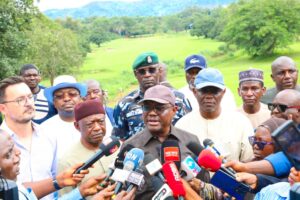
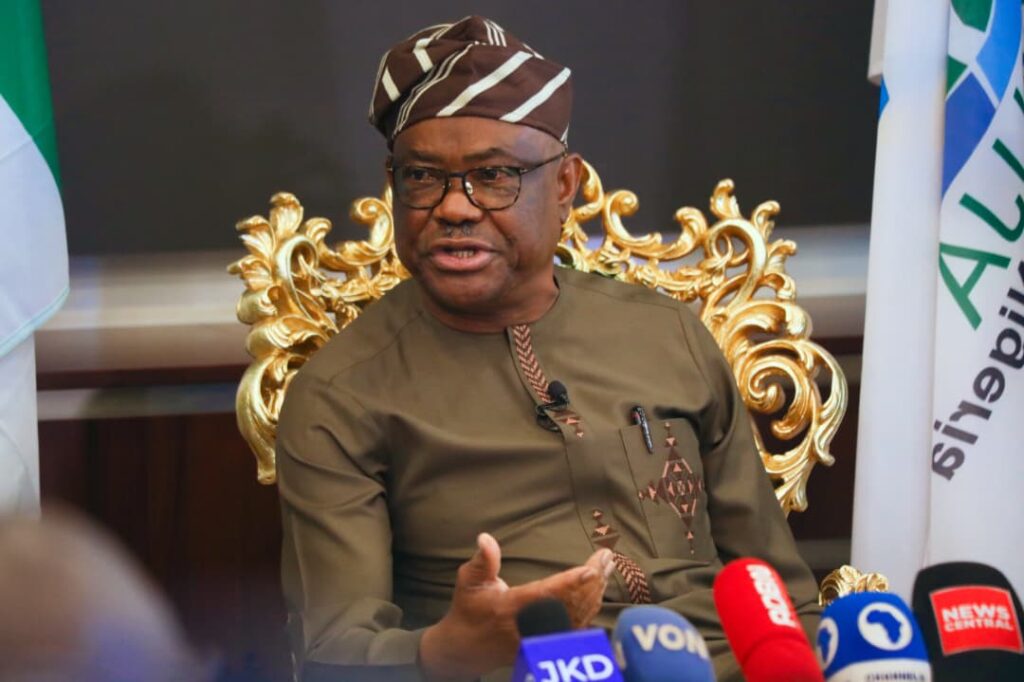
Speaking during his monthly live media chat in Abuja on Monday, June 1, 2026, Barr. Wike disclosed that President Bola Ahmed Tinubu will commission several major projects in satellite towns as part of activities marking the administration’s third anniversary.
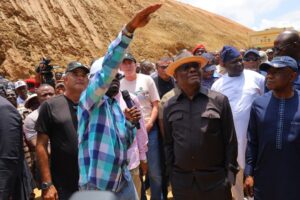
The Minister said his administration deliberately shifted focus to neglected rural communities after extensive consultations with traditional rulers, youths, women, and other stakeholders who identified poor road infrastructure as a major driver of insecurity.
“What we did was to go to the rural areas and interact with the stakeholders — the chiefs, the youths, the women and other leaders”, Barr. Wike said. “What I found very interesting is that they know their terrain. They told us most of the roads were not passable at all and that even when attacks occurred, security operatives could not effectively respond because the roads were bad. So, we took on the task and built the roads they themselves nominated”.
He said the intervention has yielded positive results, particularly in Kuje Area Council, where several road projects have been completed. “Those roads have been built, and it really helps in terms of reducing insecurity and in terms of having access to their farmland”, he stated.
Barr. Wike stressed that unlike previous administrations that announced policies without implementation, the current FCT Administration is focused on delivering tangible results. “Whatever policies we make, by the grace of God, we will implement them. That is how people are going to see the impact of governance, particularly in the rural areas”, he said.
The FCT Minister further disclosed that President Bola Ahmed Tinubu is scheduled to commission extensive water projects in satellite towns, specifically targeting Karu and Bwari, following the recent execution of city centre water projects. “We can’t concentrate only on the city. We must also move to the satellite towns and provide them with critical infrastructure”, the Minister declared.
He revealed that water schemes in Kuje, Orozo, and Gwagwalada, which are also set to be executed this year will further improve access to potable water in underserved communities.
The Minister further listed completed or nearing-completion road projects across the Territory, including the A2-Pai road, the Bwari-Kubwa corridor, roads in Dei-Dei, and sections of the A3 highway. He confirmed that the Bwari-Kubwa road will be completed this year, while work is progressing on the Abuja airport corridor and the Zuba-Airport link road aimed at reducing traffic congestion within the city centre.
Barr. Wike also announced plans to review the Abuja Master Plan, with discussions with the original Japanese designers scheduled for July. “The world has changed. The world is different. You have to conform with current realities”, he said, noting that development must align with modern urban planning needs.
He added that the FCT Administration is constructing additional hostel accommodation for students at the Nigerian Law School to improve educational infrastructure in the capital.
To sustain the current pace of development, the Minister reminded residents of their civic obligations, stressing that residents must play their part by paying taxes and land fees promptly.
Shifting focus to national politics, the Minister faulted claims by key opposition figures that they were the new face of democracy, arguing that recent disputes arising from their primary elections have undermined claims that they offer a credible alternative to Nigeria’s established political parties.
“They told Nigerians they were the new face of democracy and the alternative platform for change. But what we have seen is that even within their own structures, there are allegations of irregularities and protests over congresses and primaries”, Barr. Wike said.
He noted that even presidential aspirants openly questioned the credibility of the exercises. “my recent assessment is that the parties that have been tested over time understand the complexities of Nigeria’s political culture and democratic process”, he stated.
He also faulted the standard bearer of the Nigeria Democratic Congress (NDC), Peter Obi for consistently running away from political challenges through serial party defections, describing him as a “Food is ready politician”.
The former Rivers State governor dismissed suggestions that some of Nigeria’s major political parties had become irrelevant, stressing that political relevance is ultimately determined by performance, internal cohesion and public support.
Defending the multi-party coalition in in Rivers State, Barr. Wike stated that it was formed purely to protect the collective interest of the State over individual ambitions, signaling an end to the winner-takes-all type of politics. He noted that the coalition is conducting thorough groundwork and will collectively endorse a single, widely accepted candidate by August.
Speaking on the internal affairs of the People’s Democratic Party, the FCT Minister affirmed that the Supreme Court has permanently laid to rest all internal contentions within the party and vowed that illegal congresses by aggrieved party members threatening the peace of the FCT would be strictly resisted.
Barr. Wike also used the occasion to urge residents and the media to embrace constructive engagements with government by drawing attention to areas requiring intervention rather than merely criticizing public policies.
“Government can’t do everything. If citizens call our attention to certain things and make useful suggestions, we can act on them. Constructive criticism is important”, he added.
He urged political leaders to focus on strengthening democratic institutions and promoting internal party democracy rather than relying on rhetoric aimed at discrediting opponents.